 Key Takeaways
- A wedding ritual is a symbolic act, like lighting a candle or tying a cord, that a couple adds to their ceremony to represent their beliefs, heritage, or relationship.
- Religious traditions offer some of the most recognizable wedding rituals, including the unity candle, the breaking of the glass, and the Hindu saptapadi.
- Cultural customs such as handfasting, jumping the broom, and the Chinese tea ceremony connect a couple to their family heritage.
- Couples tied to the military or a specific career often build rituals around that shared identity, such as raising an arch of sabers or staging a first responder sendoff.
Previous Step: Wedding Readings and Prayers
Before any symbolic rituals begin, many ceremonies include wedding readings or prayers that reflect the couple's beliefs and values. Learn how to present them naturally within the ceremony.
Why Wedding Rituals Make Every Ceremony More Meaningful
Picture the moment right after the vows, when two candles become one flame, or a couple steps beneath an arch of raised swords. Wedding rituals like these add personality to a ceremony that might otherwise follow the same wedding script as every other event.
Most rituals draw from a couple’s background and shared story to create a moment that feels deeply personal. Here’s a closer look at where these special wedding ritual ideas come from and how to bring one into a ceremony you’re planning to officiate.
What Are Wedding Rituals?
A wedding ritual is a symbolic action that a couple adds to their ceremony to represent something meaningful, whether that’s their faith, their family history, or the life they’re building together. When performing a wedding, officiants usually put the ritual after the wedding charge and before the exchange of vows, though couples can organize their big day however they’d like.
Religious Wedding Rituals
Some of the most recognizable wedding rituals come straight from religious tradition. Couples who choose these rituals are often paying tribute to their own faith, a partner’s family background, or both.
Unity Candle Ceremony
The unity candle shows up in Christian and nondenominational ceremonies alike. Each partner’s parents, or the couple themselves, light two smaller candles to represent their individual families.
The couple then uses those two flames to light one larger candle together, symbolizing two families and two lives joining as one. Because the ritual depends on an open flame, many couples skip it for outdoor or windy venues and choose a different unity ritual instead.
Wedding Prayer or Blessing
A wedding prayer or blessing invites a higher power into the ceremony and asks for guidance over the marriage ahead. An officiant might read directly from a religious text, such as a passage from Corinthians in a Christian ceremony, or offer a more general blessing that fits a blended or interfaith couple. This moment usually works well right before or right after the wedding vows.
Breaking the Glass
At the end of many Jewish wedding ceremonies, the groom, or sometimes both partners, steps on a glass wrapped in cloth and shatters it underfoot to cheers of “Mazel tov!” The broken glass carries layered meaning. It’s a reminder that even joyful moments hold a note of fragility, and some couples connect it to mourning the destruction of the Temple in Jerusalem. This Jewish wedding ritual also marks the official close of the ceremony.
Catholic Lazo, Arras, or Veil Ceremony
In Hispanic and Filipino Catholic weddings, the couple’s padrinos, or wedding sponsors, drape the lazo, a cord, rosary, or ribbon, over the couple’s shoulders in a figure eight shape right after the vows to represent their unbreakable bond.
Some ceremonies add the arras, a set of thirteen coins that partners exchange as a pledge to provide for and support each other, or a veil draped over both partners for extra protection and unity.
Hindu Sacred Fire and Seven Steps
A traditional Hindu wedding builds toward saptapadi, the ritual in which the couple circles a sacred fire, known as Agni, seven times. With each step, or phera, they make a specific promise to each other covering nourishment, strength, prosperity, family, and lifelong companionship.
Agni witnesses these vows, and the ritual is considered the exact moment the marriage becomes complete.
Cultural Wedding Rituals
Cultural rituals connect a wedding to a couple’s heritage even when the ceremony isn’t tied to one specific religion. Many of these traditions involve family members or the entire guest list, turning a private commitment into something the whole community takes part in.
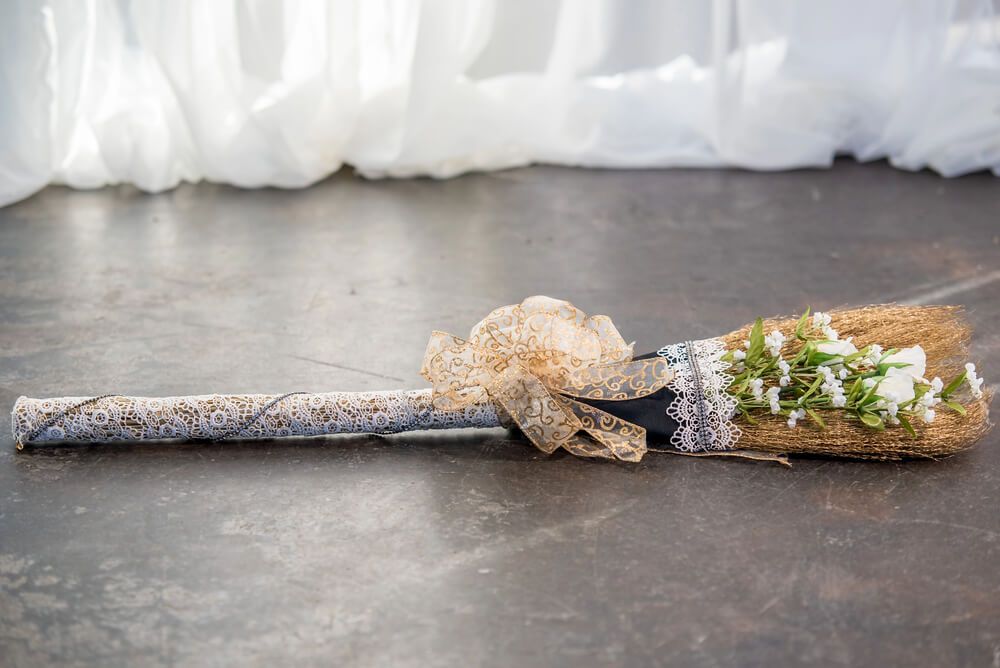
Jumping the Broom
Jumping the broom traces back to African American history. Enslaved couples in the United States had no legal right to marry, so jumping over a broom together became a way to declare their commitment to one another publicly.
Today, many African American couples include this ritual near the end of the ceremony as a tribute to that history and to the ancestors who came before them.
Chinese Tea Ceremony
Tea takes center stage in a traditional Chinese wedding, where the couple serves it to both sets of parents and elders, often while kneeling as a sign of respect.
The ritual formally welcomes each partner into the other’s family and thanks both sets of parents for raising them. Couples sometimes sweeten the tea with lotus seeds or red dates to symbolize a fruitful, harmonious marriage ahead.
Handfasting Ceremony
Handfasting comes from Celtic tradition and involves tying the couple’s hands together with cords or ribbons, often in a figure eight or knot pattern. It’s actually where the phrase “tying the knot” comes from.
Many couples personalize this wedding ritual by choosing cord colors that represent specific values, like red for passion or green for growth, and let a minister or loved one lead the binding.
Hawaiian Lei Exchange
A Hawaiian wedding often pairs the ring exchange with an exchange of flower leis, or replaces it entirely. Each partner places a lei over the other’s shoulders with a kiss, symbolizing love, respect, and the joining of two people into one relationship. Guests sometimes add their own leis throughout the celebration, building a colorful, fragrant tribute to the couple by the end of the night.
Henna or Mehndi Ceremony
Common in South Asian and Middle Eastern weddings, the henna or mehndi ceremony usually happens a day or two before the wedding itself. An artist paints intricate henna designs onto the bride’s hands and feet, and sometimes the groom’s as well. Many cultures believe these designs bring good luck, joy, and protection into the marriage that follows.
Blanket Ceremony
Some Native American wedding traditions wrap the couple together in a single blanket, or in two blankets joined into one, symbolizing their two lives and families becoming a single unit. An elder or officiant often leads this ritual and may offer words about the path the couple is choosing to walk together.
Symbolic Wedding Rituals
Not every couple wants to draw from a specific religion or culture, and that’s where symbolic rituals come in handy. These options work for secular ceremonies, blended families, or any couple who wants a clear visual moment without ties to a particular tradition.
Sand Ceremony
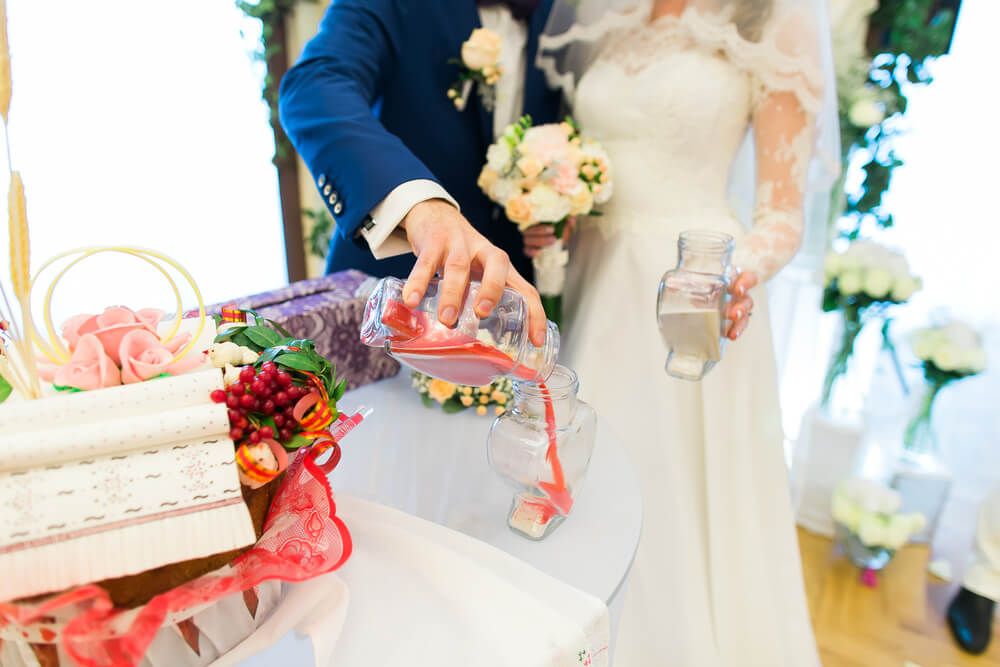
A sand ceremony works a lot like a unity candle, except each partner pours a different colored sand into one shared vessel. The colors blend permanently, which many couples describe as a better symbol than a flame that eventually burns out. It’s also a popular alternative for outdoor weddings where wind makes candles impractical.
Ring Warming Ceremony
During a ring warming ritual, guests pass the wedding rings around earlier in the ceremony, or before it begins, so each person can hold them for a moment and silently offer a wish for the marriage. By the time the rings reach the officiant for the actual exchange, they carry the goodwill of everyone in the room.
Tree Planting or Seed Planting Ceremony
Planting a tree or scattering seeds together turns a single ceremony moment into something a couple can revisit for years. Some couples mix soil from two meaningful places, like their childhood homes, before planting. As the tree takes root and grows, it becomes a living symbol of the marriage, and couples often return to visit it on anniversaries.
Military Wedding Rituals
Couples with ties to the armed forces often build wedding rituals around the pride and traditions of military service. These moments usually happen right after the ceremony, once the wedding party and any service members are already in formation outside.
- Arch of Sabers or Swords: As the newlyweds exit the ceremony, fellow service members form an arch overhead with raised sabers or swords. The final pair often lowers their blades to block the couple’s path until they share a kiss.
- Saber or Sword Cake Cutting: The couple cuts the first slice of cake using the same saber or sword from the arch, with the groom’s hand resting over the bride’s.
- Military Honor Guard or Formal Exit: An honor guard may salute the couple, present a flag, or escort the couple through a formal exit.
Officiants should confirm with the venue whether service members may draw sabers on-site, since many churches and chapels require the arch to happen just outside the building instead of inside the sanctuary.
Profession-Inspired Wedding Rituals
Couples sometimes borrow wedding ritual ideas for military ceremonies and apply them to a different career as a way to honor the work that’s shaped a couple’s life together. Examples include:
- Professional Guard of Honor: Colleagues form an arch using tools tied to their profession, like a firefighter’s axes, a chef’s whisks, or a teacher’s books, instead of sabers.
- First Responder Sendoff: Fellow police officers, firefighters, or paramedics escort the couple’s car as they leave the venue, often with lights and sirens running.
- Team, Workplace, or Community Blessing: A sports team, a group of coworkers, or a close-knit community gathers to offer a short blessing or tribute, recognizing how much that group shaped the couple’s relationship.
A profession-inspired ritual works best when it’s specific to the couple. A generic honor arch can feel forced, but an arch of fire axes for two firefighters who met at the station is meaningful.
Next Step: The Wedding Charge
Once any special rituals have concluded, the officiant turns their attention directly to the couple. Learn how to deliver a meaningful wedding charge before the vows.
Perform Special Wedding Rituals as an Ordained Minister
A great wedding ceremony comes down to making the moment feel personal, and special rituals are one of the easiest ways to deliver that. Whether you guide a couple through a unity candle, a saber arch, or a tradition entirely their own, your job as the officiant is to give that moment room to breathe.
If you feel called to lead ceremonies like these, become an ordained minister online through the Universal Life Church. ULC ordination is free and gives you the legal authority to officiate ceremonies and bring meaningful wedding rituals to life for couples everywhere.
Frequently Asked Questions About Wedding Rituals
What is the purpose of a wedding ritual?
Wedding rituals symbolize a couple's commitment, values, faith, or heritage. They create memorable moments during the ceremony and often represent the joining of two lives, families, or traditions.
Are wedding rituals legally required?
No. Wedding rituals are entirely optional and have no impact on the legal validity of a marriage. The legal requirements are determined by your state's marriage laws, while rituals are personal additions to the ceremony.
Where should a wedding ritual take place during the ceremony?
Many officiants include a ritual after the wedding charge and before the exchange of vows, but there are no fixed rules. Some traditions naturally occur after the vows, after the ring exchange, or as the ceremony concludes.
Can couples include more than one wedding ritual?
Yes. Many couples combine multiple traditions, especially during interfaith or multicultural weddings. For example, a ceremony may include both a handfasting and a unity candle, or a tea ceremony followed by a sand ceremony.
Can an officiant suggest wedding rituals to a couple?
Absolutely. Couples often appreciate ideas they may not have considered. An officiant can explain the meaning behind different rituals and help the couple choose traditions that reflect their relationship and beliefs.
How do you choose the right wedding ritual?
The best wedding ritual reflects the couple's story. Consider factors such as family traditions, religious beliefs, cultural heritage, shared careers, favorite symbols, or meaningful experiences together.
Can you create your own wedding ritual?
Yes. Many couples design unique rituals that represent their relationship. As long as everyone involved understands its meaning and it fits naturally into the ceremony, a personalized ritual can be just as meaningful as a traditional one.
Do wedding rituals work for nonreligious ceremonies?
Definitely. Many symbolic rituals, such as sand ceremonies, ring warming, tree planting, or custom unity ceremonies, are popular choices for secular weddings because they focus on the couple's commitment rather than a specific faith.