Key Takeaways
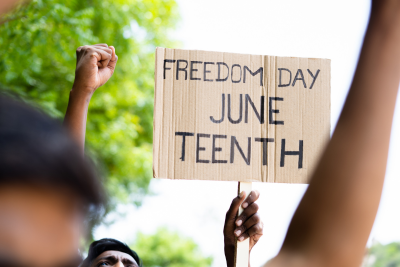
- Juneteenth commemorates the arrival of freedom in practice. It marks June 19, 1865, when enslaved people in Texas finally learned they were free, more than two years after the Emancipation Proclamation.
- Faith traditions across the world emphasize liberation and human dignity. From the Exodus story to teachings on spiritual freedom in Islam, Hinduism, and Buddhism, many religions view freedom as a sacred value.
- Religious leaders played a major role in advancing freedom and civil rights. Figures such as Harriet Tubman, Frederick Douglass, Sojourner Truth, and Henry Highland Garnet drew on their faith to challenge slavery and injustice.
- The work of freedom did not end with emancipation. Faith communities continued to lead efforts against segregation, discrimination, and unequal treatment throughout the civil rights era and beyond.
- Juneteenth remains relevant for ministers today. The holiday reminds faith leaders of their role in helping ensure that every person's dignity, rights, and humanity are respected both in principle and in practice.
Juneteenth is the American celebration of the arrival of freedom. On June 19, 1865, enslaved people in Galveston, Texas, received word that they were free, more than two years after the Emancipation Proclamation had legally declared it. For people of faith across traditions, the holiday carries a meaning that runs deeper than history: it is a living reminder that proclaimed freedom and practiced freedom are two different things, and that closing the gap between them is exactly the work of ministry.
According to a Pew Research Center survey, roughly 45% of Americans say religion plays a significant role in how they think about social justice issues. Juneteenth brings that intersection into sharp focus. The question the holiday poses is not only "What happened?" It is "What are we still being called to do?"
What Is Juneteenth, and Why Does the Date Matter?
Juneteenth combines "June" and "nineteenth." It marks the day in 1865 when Union soldiers arrived in Galveston with General Order No. 3, informing enslaved Texans that the Civil War was over and that they were free. President Abraham Lincoln had issued the Emancipation Proclamation on January 1, 1863, but enforcement depended entirely on the presence of Union troops. In Texas, that enforcement arrived two and a half years late. The gap between the law and its reality is the heart of what Juneteenth commemorates. In 2021, Juneteenth became a federal holiday, though observance and recognition still vary across states and institutions.
What Do Faith Traditions Say About Freedom?
The major world religions share a consistent theme at their core: bondage is incompatible with the sacred, and liberation is a moral obligation. Moses leads his people out of Egypt. The Buddha's teaching begins with suffering and charts a path toward release. The Prophet Muhammad's final sermon declared that no person is superior to another by birth, regardless of skin color. In the Hindu tradition, moksha, spiritual liberation, is the highest aim of human life. These are not parallel metaphors. They are a shared insistence that freedom matters to the divine.
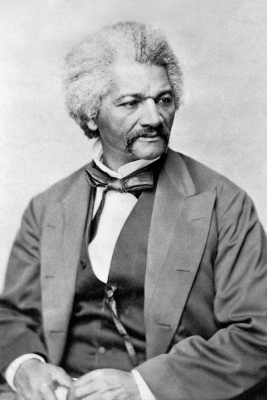
For Christians in particular, Juneteenth carries a charged complexity. Christianity was weaponized to justify American slavery for centuries, with selective scripture readings used to defend what Frederick Douglass called the slaveholding religion. Yet it was also the faith that animated abolitionists. Harriet Tubman credited divine visions with guiding every trip she made on the Underground Railroad: 13 missions that freed approximately 70 people, according to the National Park Service. Sojourner Truth preached abolition from pulpits across the North, insisting that God's law superseded any law that sanctioned human bondage. Frederick Douglass, a licensed preacher, wielded scripture as powerfully as argument in his speeches and writings. Henry Highland Garnet, a Presbyterian minister, called enslaved people to resist in the name of a God who never sanctioned their chains. Their faith was the engine of their action. Their faith was the root of their activism. That same calling is open to anyone today. Becoming an ordained minister is where it begins.
How Did Faith Carry Freedom Forward After 1865?
Emancipation did not end the work. The century following the Civil War saw the rise of Jim Crow laws, legal segregation, and systematic exclusion that kept the letter of freedom at arm's length from its spirit. Again, it was faith communities that pushed hardest against the gap. The civil rights movement of the 1950s and 1960s organized through Black churches, drew moral authority from scripture, and trained its leaders in the language of theology as much as law. According to the National Archives, more than 90% of the strategy sessions for the Montgomery Bus Boycott were held in church buildings.
The same pattern repeated in 1967, when the Supreme Court ruled in Loving v. Virginia that laws banning interracial marriage were unconstitutional. Richard and Mildred Loving had simply wanted to build a life together. They were arrested in their own bedroom for it. The court struck down the laws of 16 states. But legal permission did not erase family rejection, social hostility, or the refusal of many congregations to perform interracial ceremonies. The ministers who stood before those couples and said your love is sacred were doing exactly what Douglass, Tubman, and Garnet had done before them: closing the gap between what was proclaimed and what was practiced.
Putting Freedom into Practice
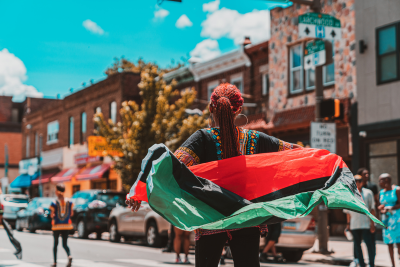
Freedom is something people help make real for one another. The stories of Harriet Tubman, Frederick Douglass, and countless faith leaders throughout American history remind us that ministry often means standing beside people whose dignity, relationships, or beliefs are not fully recognized by the communities around them.
That work continues today. Every year, ULC ministers officiate weddings, lead ceremonies, and support individuals and families from all backgrounds, helping create spaces where people feel seen, respected, and welcomed.
If that vision of ministry resonates with you, becoming ordained through the Universal Life Church is free, simple, and open to everyone. Get ordained today and join a community committed to expanding freedom, inclusion, and respect for all people.
You Might Also Wonder…
- How have faith communities contributed to racial justice in America? The ULC blog post Building Racial Equity in the Church offers a practical starting point, including resources for building antiracist curricula in congregations.
- What does the Washington National Cathedral's recent history say about how religious institutions handle their past? The ULC blog's coverage of "A Beacon of Change: The National Cathedral's Transformation for Racial Justice" explores the cathedral's replacement of Confederate-era stained glass with racial-justice imagery.
- How does the ULC approach ordination for people of all backgrounds? The Philosophy and Beliefs of the Universal Life Church page covers the church's commitment to open, inclusive ministry.
Frequently Asked Questions About Juneteenth and Faith
What is Juneteenth?
Juneteenth is a holiday observed on June 19 that commemorates the day in 1865 when enslaved people in Galveston, Texas, learned they were free following the Civil War. It marks the effective arrival of emancipation in the last Confederate state.
Why is Juneteenth important to people of faith?
Many faith traditions teach that freedom, dignity, and human equality are sacred values. Juneteenth highlights the responsibility of religious communities to help ensure that proclaimed freedoms become realities in people's lives.
How did religion influence the abolition movement?
Faith motivated many abolitionists, including Harriet Tubman, Sojourner Truth, Frederick Douglass, and Henry Highland Garnet. They drew on religious teachings to challenge slavery and advocate for human freedom and equality.
What role did churches play in the civil rights movement?
Black churches served as organizing centers for much of the civil rights movement. They provided meeting spaces, leadership development, moral guidance, and community support for efforts to end segregation and racial discrimination.
How does Juneteenth relate to modern ministry?
Juneteenth reminds ministers that their work often involves supporting people whose rights may be recognized legally but not fully accepted socially. Many clergy continue this tradition by serving diverse communities and advocating for inclusion.
Can anyone become a ULC minister?
Yes. The Universal Life Church offers free online ordination to people of all backgrounds who feel called to serve others through inclusive ministry.