Key Takeaways
- Religious traditions often change because individuals question accepted teachings, institutions, and social norms.
- Some reformers work within their faith, while others create new movements or adopt a different religious path.
- Religious challenges have involved authority, caste, gender roles, religious freedom, social justice, and politics.
- Questioning tradition does not always mean rejecting religion. Many reformers believed they were defending deeper spiritual principles.
Religious Traditions Have Always Been Questioned
Religion is rooted in tradition, but it has also been shaped by people willing to question it.
Some challenged powerful institutions, social customs, or accepted interpretations of faith. Others pushed for greater freedom of conscience or new ways of understanding belief.
Here are 10 religious leaders and thinkers who challenged the conventions of their time and reshaped the conversation around faith.
1. Martin Luther Challenged the Authority of the Catholic Church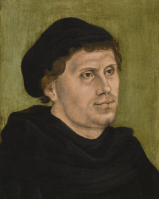
Martin Luther's criticism of the Catholic Church helped spark one of the biggest religious upheavals in European history.
In 1517, the Augustinian friar and theology professor circulated his Ninety-Five Theses, criticizing the sale of indulgences. The dispute soon expanded into larger questions about papal authority, salvation, scripture, and the role of the Church.
Luther's challenge helped ignite the Protestant Reformation and permanently altered Christianity. His story shows how questioning a single religious practice can grow into a debate that reshapes an entire tradition.
2. Guru Nanak Challenged Religious and Social Divisions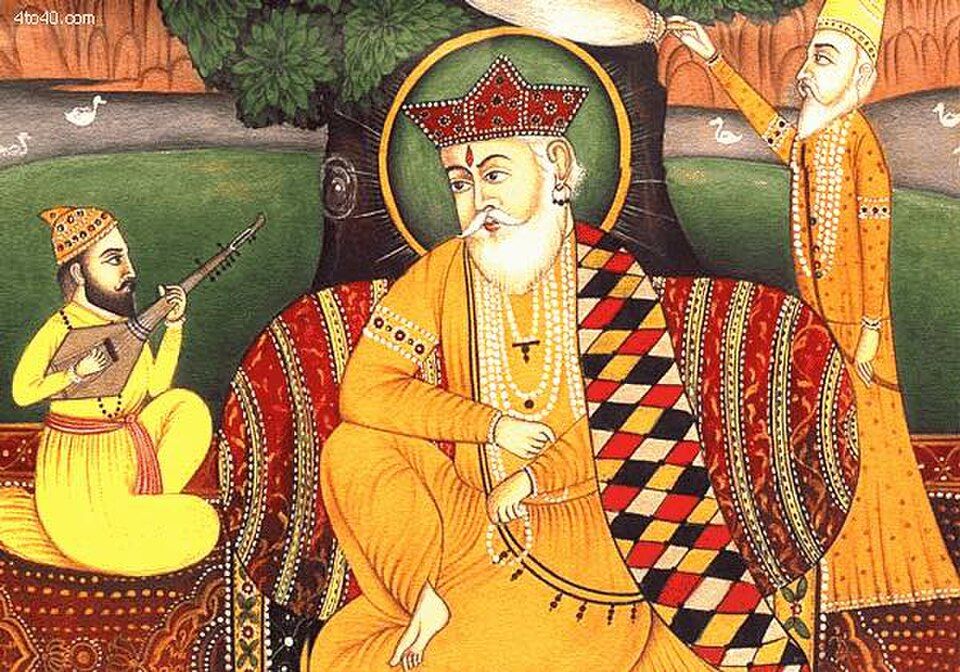
Guru Nanak, the first Sikh Guru and founder of the Sikh tradition, emphasized devotion to one God, honest living, service, and spiritual equality.
Living in a society shaped by Hindu and Muslim traditions, he rejected caste distinctions and questioned the idea that ritual or religious identity determined a person's spiritual worth.
The community built around his teachings eventually became Sikhism. His legacy demonstrates how challenging religious and social divisions can give rise to a new spiritual tradition.
3. Kabir Questioned Hindu and Muslim Orthodoxy
The Indian poet and mystic Kabir resisted being placed neatly within either Hindu or Muslim religious categories.
He criticized what he saw as empty ritual, hypocrisy, and excessive attention to religious labels. Instead, his poetry emphasized direct devotion and personal experience of the divine.
Kabir's teachings continue to resonate because they pose a simple but enduring question: If people worship differently but seek the same ultimate truth, how different are they really?
4. Raja Ram Mohan Roy Pushed for Reform Within Hindu Society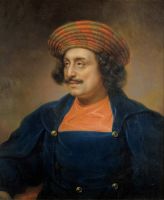
Raja Ram Mohan Roy became a major advocate for religious and social reform in 19th-century India.
He promoted a monotheistic view of faith and helped found the Brahmo Samaj, a reform movement that challenged practices it saw as departures from core religious teachings.
Roy also campaigned against sati, a historical practice in which a widow was expected or pressured in some communities to die on her husband's funeral pyre. He became a prominent critic of the practice. He advocated for women's education and greater social equality as well.
For Roy, religious reform and social reform were closely connected. Faith, in his view, should help society become more humane rather than simply preserve every inherited custom.
5. Anne Hutchinson Challenged Puritan Religious Authority
Anne Hutchinson became one of colonial America's most famous religious dissenters.
She hosted religious discussions in her home, questioned the teachings of some Puritan ministers, and emphasized a more personal understanding of grace. Her influence was especially controversial because women were largely excluded from formal religious leadership.
Hutchinson was eventually tried, banished from Massachusetts, and excommunicated.
Her story remains closely tied to the history of religious liberty and freedom of conscience in America.
6. Mary Baker Eddy Founded a New Christian Movement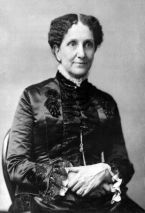
Mary Baker Eddy developed a distinctive interpretation of Christianity that eventually became Christian Science.
After years of exploring questions about healing and spirituality, she published Science and Health with Key to the Scriptures in 1875. Her teachings emphasized spiritual healing and the relationship between prayer, mind, and physical experience.
Eddy later founded the Church of Christ, Scientist.
Her life shows another way religious traditions change: a new religious movement can sometimes emerge when an existing tradition is reinterpreted in a fundamentally different way.
7. Thich Nhat Hanh Asked Buddhism to Engage With the World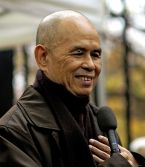
Vietnamese Zen Buddhist monk Thich Nhat Hanh argued that spiritual practice should not be separated from social responsibility.
During the Vietnam War, he became a leading voice for what came to be known as Engaged Buddhism. He applied Buddhist principles such as mindfulness, compassion, and nonviolence to conflict, injustice, and human suffering.
Rather than turning away from Buddhist tradition, Thich Nhat Hanh sought to apply its teachings to the realities of modern life.
8. Roger Williams Defended Religious Liberty
Roger Williams challenged the idea that government should enforce religious conformity.
A Puritan minister and theologian, he opposed government interference in matters of conscience and argued for greater separation between civil authority and religious belief.
His views led to his banishment from Massachusetts. He later helped establish Rhode Island, where broader protections for religious freedom took root.
Williams' legacy rests on a powerful idea: people with deeply different beliefs should still be free to follow their own consciences without government coercion.
9. B. R. Ambedkar Challenged Caste and Left Hinduism for Buddhism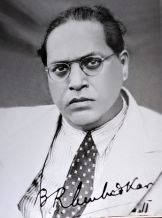
Bhimrao Ramji Ambedkar was one of India's most influential critics of the caste system.
Born into a Dalit community, he challenged religious and social structures that he believed perpetuated inequality. Over time, he concluded that reform within Hinduism was not enough.
In 1956, Ambedkar converted to Buddhism along with many of his followers. His interpretation emphasized equality, reason, human dignity, and social justice.
His story raises an important question: When does reform from within stop being enough, and when does a person choose an entirely different path?
10. Desmond Tutu Challenged Churches to Confront Apartheid
South African Anglican Archbishop Desmond Tutu believed religious faith could not remain neutral in the face of injustice.
During apartheid, he became one of the world's most prominent religious opponents of the system. Through sermons and public advocacy, he challenged both political authorities and Christians who defended apartheid or avoided confronting it.
Tutu received the Nobel Peace Prize in 1984 for his role in the nonviolent struggle against apartheid.
His example posed a difficult question for religious institutions: Is avoiding politics truly neutral when a political system harms people?
Does Religion Need People Who Question It?
Religious traditions are passed from generation to generation, but they are rarely passed down unchanged.
Believers continually debate what scripture means, which customs are essential, who should be allowed to lead, and how ancient teachings should apply to new circumstances.
Sometimes those debates produce reform. Sometimes they create new denominations or religions. And sometimes people decide that meaningful change requires leaving one tradition for another.
Questioning has always been part of religious history. The challenge is deciding which traditions continue to hold meaning and which may need to be reexamined.
What happens when personal conscience conflicts with centuries of religious tradition? And if no generation ever questioned the beliefs it inherited, what would religion look like today?
At the Universal Life Church, we believe people should be free to explore questions of faith and follow the spiritual path that speaks to them. People from many different beliefs and backgrounds choose to become ordained through the ULC, whether to perform a wedding, serve their communities, or pursue their own calling. Ordination is available online for free to anyone who feels called to take that step.
Frequently Asked Questions
Why do religious leaders challenge their own traditions?
Religious leaders may challenge established traditions because they believe certain practices have drifted away from the core teachings of their faith. Others object to social inequality, institutional authority, political involvement, or restrictions on religious freedom.
Does challenging a religion mean leaving it?
Not necessarily. Some reformers remain within their tradition and advocate for change. Others create new movements, while some ultimately adopt a different faith.
Which religious figures are known for challenging religious authority?
Examples include Martin Luther, Anne Hutchinson, Roger Williams, Guru Nanak, Raja Ram Mohan Roy, B. R. Ambedkar, and Desmond Tutu. Their challenges ranged from church authority and caste to religious liberty and social justice.
How has religious reform changed society?
Religious reform has influenced debates about civil rights, gender roles, education, caste, political power, freedom of conscience, and the relationship between religion and government.
Can religious traditions change over time?
Yes. Religious traditions evolve as believers interpret scriptures, respond to social change, debate doctrine, and encounter other cultures and belief systems.
What is the connection between religious freedom and religious reform?
Religious reform often depends on the freedom to question established beliefs. Freedom of conscience allows individuals and communities to interpret faith differently, form new religious movements, change religions, or practice no religion at all.