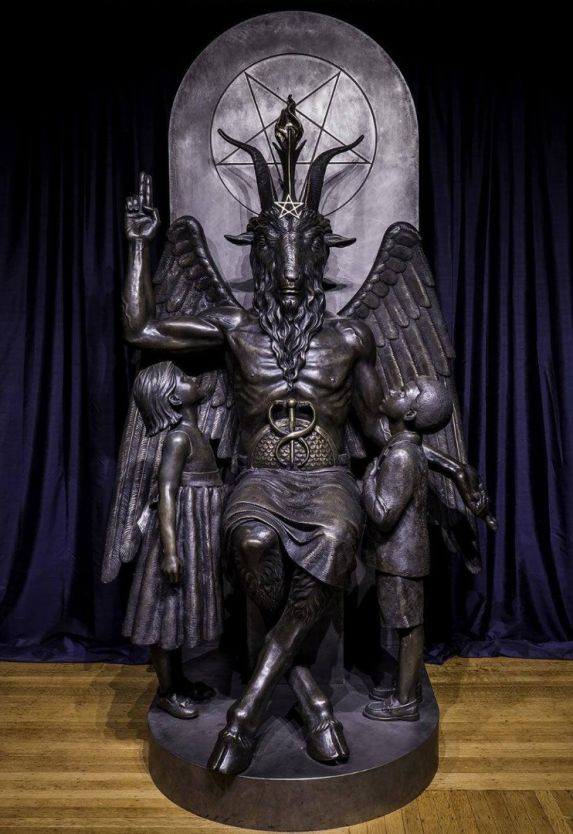
Satanism does not have one universal set of commandments. The Church of Satan follows the Eleven Satanic Rules of the Earth alongside other LaVeyan principles, while The Satanic Temple follows Seven Fundamental Tenets. Other Satanists may follow different beliefs and ethical codes entirely.
Key Takeaways
- There is no single set of “Satanic commandments” followed by all Satanists.
- The Church of Satan uses the Eleven Satanic Rules of the Earth, Nine Satanic Statements, and Nine Satanic Sins.
- The Satanic Temple follows Seven Fundamental Tenets centered on ideas such as compassion, justice, autonomy, and reason.
- The Church of Satan and The Satanic Temple are separate nontheistic organizations with different philosophies.
- Theistic Satanism is decentralized, so its beliefs and rules vary among practitioners.
Does Satanism Have a Version of the Ten Commandments?
Not exactly. Satanism is not a single religion governed by one authority, scripture, or moral code.
Modern Satanic traditions differ in how they understand Satan, ethics, ritual, and religious identity. The Church of Satan and The Satanic Temple, for example, both use Satan symbolically rather than believing in a literal supernatural Satan. Other people who identify as theistic Satanists may understand Satan as a real spiritual being.
Because these traditions do not share one central authority, there is no universal Satanic counterpart to the biblical Ten Commandments.
What Are the Church of Satan’s Rules?
Founded by Anton LaVey in 1966, the Church of Satan describes itself as atheistic and uses Satan as a symbol of individualism, self-determination, and opposition to conventional religious authority.
Its philosophy is expressed through three major sets of teachings.
The Eleven Satanic Rules of the Earth
The Eleven Satanic Rules of the Earth were written by LaVey in 1967.
They are probably the closest thing the Church of Satan has to a behavioral code. Their themes include:
- respecting other people’s space
- avoiding unwanted sexual advances
- taking responsibility for personal choices
- protecting children and animals from harm
- setting and defending personal boundaries
Some of the rules use intentionally provocative language, reflecting the confrontational tone associated with LaVeyan Satanism.
But calling them “commandments” can be misleading. They are not presented as divine laws handed down by a supernatural Satan.
The Nine Satanic Statements
The Nine Satanic Statements appear in Anton LaVey’s 1969 book The Satanic Bible.
The statements describe what Satan symbolically represents within LaVeyan philosophy. Common themes include indulgence, earthly existence, skepticism, personal responsibility, and rejection of certain traditional Christian ideals.
They function more like philosophical principles than religious laws.
The Nine Satanic Sins
The Church of Satan also identifies Nine Satanic Sins.
Here, “sin” does not mean offending God. Because the Church of Satan is atheistic, the term instead refers to traits the organization considers counterproductive, including stupidity, pretentiousness, self-deceit, conformity, and lack of perspective.
The Rules, Statements, and Sins make up the Church of Satan’s broader ethical framework.
What Are The Satanic Temple’s Seven Tenets?
The Satanic Temple follows a different ethical system known as the Seven Fundamental Tenets.
The tenets emphasize broad principles such as:
- compassion and empathy
- pursuing justice
- bodily autonomy
- respecting the freedoms of others
- aligning beliefs with scientific understanding
- acknowledging and correcting mistakes
- applying principles with wisdom, compassion, and justice
The Satanic Temple also states that it does not consider The Satanic Bible sacred scripture and does not follow LaVeyan Satanism.
That distinction is important as The Satanic Temple and the Church of Satan are frequently confused with one another.
These principles also play a role in broader religious freedom disputes involving The Satanic Temple, including debates over whether Satanic groups should receive the same access to public spaces as other religious organizations.
Church of Satan vs. The Satanic Temple
Church of Satan
- View of Satan: Symbolic, not literal
- Main ethical framework: Eleven Satanic Rules, Nine Satanic Statements, and Nine Satanic Sins
- The Satanic Bible: Foundational LaVeyan text
- General emphasis: Individualism, self-interest, and personal responsibility
- Divine commandments: No
The Satanic Temple
- View of Satan: Symbolic, not literal
- Main ethical framework: Seven Fundamental Tenets
- The Satanic Bible: Not followed as scripture
- General emphasis: Compassion, autonomy, reason, and justice
- Divine commandments: No
Both traditions are nontheistic, but that does not make them interchangeable.
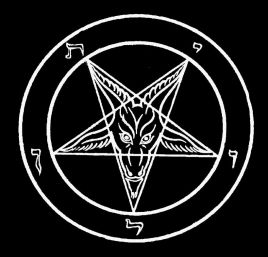
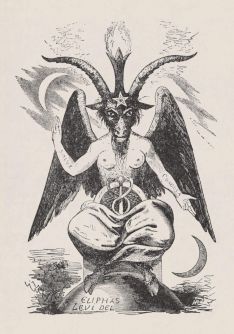
The same principle applies to Satanic imagery. Satanic symbols can have different histories and meanings depending on the group or context.
Do Theistic Satanists Have Commandments?
There is no universally accepted set of commandments for theistic Satanism.
Theistic Satanists generally understand Satan as a real spiritual or supernatural being, but there is no single organization or authority representing them. Ethical beliefs may therefore vary by practitioner or group, with some drawing on occult, devotional, or personally developed traditions.
Even the label itself is debated: the Church of Satan rejects “theistic Satanism” as a contradiction, while others use the term more broadly.
So, unlike the Church of Satan or The Satanic Temple, theistic Satanism does not have one standardized set of rules or tenets.
Are Satanic Rules About Doing Evil?
Popular culture often portrays Satanism as an inversion of Christianity in which followers deliberately embrace evil. The teachings of modern Satanic organizations are more complicated.
The Satanic Temple describes its ethics in terms of compassion, justice, autonomy, reason, and responsibility. The Church of Satan emphasizes individualism, personal responsibility, boundaries, and self-interest, although some of its teachings use deliberately confrontational language.
People from other religious or ethical traditions may strongly disagree with those philosophies. But understanding Satanism accurately requires examining what particular groups actually teach rather than assuming that anything labeled “Satanic” is simply a command to do harm.
Explore Different Religious Traditions With the ULC
Understanding unfamiliar religions often begins with looking beyond assumptions and examining what different traditions actually teach.
The Universal Life Church provides resources and an open community for people from a wide range of faiths and belief systems to explore religious questions, ethics, and ministry.
If you’d like to access these resources and join the community, you can become ordained online for free.
Frequently Asked Questions
How many commandments does Satanism have?
There is no universal number. The Church of Satan has Eleven Satanic Rules of the Earth, while The Satanic Temple follows Seven Fundamental Tenets. Other Satanists may use different ethical frameworks.
What are the Eleven Satanic Rules?
The Eleven Satanic Rules of the Earth are behavioral principles written by Anton LaVey for the Church of Satan. They address topics including boundaries, personal responsibility, consent, and treatment of other people and animals.
What are the Seven Satanic Tenets?
The Satanic Temple’s Seven Fundamental Tenets emphasize principles such as compassion, justice, bodily autonomy, freedom, scientific understanding, accountability, and wisdom.
Are the Seven Tenets Satanic commandments?
Not exactly. The Satanic Temple presents them as guiding ethical principles rather than commandments issued by a supernatural authority.
Do Satanists worship Satan?
Some do, but many do not. The Church of Satan and The Satanic Temple are nontheistic and treat Satan symbolically. People described as theistic Satanists may believe in Satan as a real spiritual being.