 Can Christians support war while following a faith that teaches peace? The Bible contains accounts of battles, teachings about government authority, and commands to love one's enemies. These passages have shaped centuries of debate over whether military service is compatible with Christian beliefs.
Key Takeaways
- The Bible does not universally condemn war, but neither does it portray every war as morally justified.
- Jesus taught his followers to love their enemies, reject revenge, and work toward peace.
- The Bible does not explicitly prohibit military service, but Christians disagree about whether fighting in war is morally acceptable.
- Christian pacifism rejects participation in warfare, while just war theory establishes conditions under which war might be justified.
What Does the Bible Say About War?
The Bible acknowledges war as part of human history but repeatedly emphasizes peace, justice, and reconciliation. While some Old Testament passages describe divinely commanded conflicts, Jesus teaches his followers to love their enemies and become peacemakers. Christians therefore differ on whether warfare can ever be morally justified.
In the Old Testament, military conflicts appear throughout the history of ancient Israel. The Book of Joshua describes Israelite conquests, while the books of Samuel recount battles fought under Kings Saul and David.
One frequently cited passage is Ecclesiastes 3:8:
"A time to love, and a time to hate; a time of war, and a time of peace."
However, this verse describes contrasting seasons of human experience. It is not necessarily an endorsement of warfare.
Elsewhere, Isaiah 2:4 envisions a future in which nations transform swords into plowshares and no longer learn war.
These passages reveal a central biblical tension: war exists in the world, but lasting peace remains an important spiritual ideal.
What Did Jesus Say About War and Peace?
Jesus' teachings in the New Testament place considerable emphasis on peace, forgiveness, and love for one's enemies.
Three passages are especially important:
- Matthew 5:9: Jesus declares, "Blessed are the peacemakers," in the Sermon on the Mount.
- Matthew 5:44: Jesus instructs his followers to love their enemies and pray for those who persecute them.
- Matthew 26:52: When Jesus is arrested, he tells a disciple to put away his sword, warning that those who take the sword will perish by it.
These teachings have inspired Christian movements committed to nonviolence, including traditions associated with the Quakers and Mennonites.
Yet Christians disagree about whether Jesus' commands prohibit all participation in war or primarily instruct individuals to reject hatred, revenge, and personal violence.
Jesus also warned that wars would continue. In Matthew 24:6, he speaks of "wars and rumours of wars." This warning has influenced Christian discussions about biblical predictions of the end times, although Jesus does not present warfare as something his followers should celebrate.
Does the Bible Allow Christians to Serve in the Military?
The Bible does not explicitly prohibit Christians from becoming soldiers. However, it also does not provide unconditional approval of military service.
Several New Testament passages feature soldiers without directly condemning their profession.
John the Baptist's Instructions to Soldiers
In Luke 3:14, soldiers ask John the Baptist what they should do. Rather than commanding them to leave the military, he tells them not to mistreat or falsely accuse others and to be content with their wages.
Some Christians interpret this as evidence that military service itself is not sinful.
Jesus and the Roman Centurion
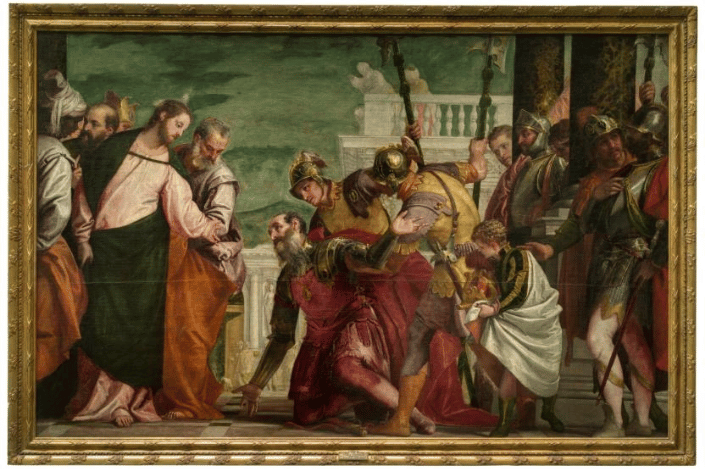
In Matthew 8:5–13, Jesus encounters a Roman centurion seeking healing for his servant.
Jesus praises the centurion's faith without explicitly condemning his military position. However, the passage focuses on faith and healing, not the morality of warfare.
Paul on Government Authority
Romans 13:1–4 discusses the authority of governments to maintain order and punish wrongdoing.
Christians who support military service sometimes interpret this passage as recognizing a legitimate role for government force. Others caution that it does not automatically justify every military action or command.
Is Killing in War a Sin?
Whether killing in war is sinful depends on how Christians interpret biblical commandments about taking human life, self-defense, and the moral limits of violence.
The Sixth Commandment, commonly translated in the King James Version as "Thou shalt not kill," is central to this debate.
Many modern translations render the commandment as "You shall not murder," reflecting a distinction between unlawful killing and other forms of taking life.
That distinction has influenced Christian arguments about self-defense, military combat, and the use of force. However, Christians disagree over when, if ever, taking a life can be morally justified.
Two major approaches illustrate that disagreement.
Christian Pacifism: Is War Incompatible With Jesus' Teachings?
Christian pacifists generally believe that following Jesus requires rejecting violence and refusing to participate in warfare.
They emphasize loving one's enemies, turning the other cheek, and seeking reconciliation rather than retaliation.
Pacifism has influenced religious and social movements throughout history, including nonviolent actions that have brought about social change.
Just War Theory: Can Warfare Ever Be Morally Justified?
Other Christians follow principles commonly associated with just war theory, developed through centuries of Christian ethical thought, including the writings of Augustine and Thomas Aquinas.
This framework asks whether a war can be morally justified and how it must be conducted.
Common principles include:
- Just cause: Force must respond to a sufficiently serious wrong, such as aggression.
- Legitimate authority: Decisions to wage war must be made by appropriate authorities.
- Last resort: Reasonable peaceful alternatives should be exhausted.
- Proportionality: The expected benefits must outweigh the anticipated harm.
- Protection of civilians: Attacks must distinguish military targets from noncombatants.
These principles do not make every war morally acceptable. Instead, they establish conditions intended to limit violence and prevent unnecessary suffering.
The debate remains relevant today, particularly when military personnel face orders that conflict with their moral or religious convictions.
What Does the Bible Say About Honoring Soldiers and Veterans?
The Bible does not address modern observances such as Veterans Day, but it contains teachings about sacrifice, compassion, service, and caring for others.
For example, John 15:13 speaks of the profound love involved in laying down one's life for friends. Although Jesus speaks in the context of his own teachings and impending sacrifice, some Christians apply the passage to those who risk their lives protecting others.
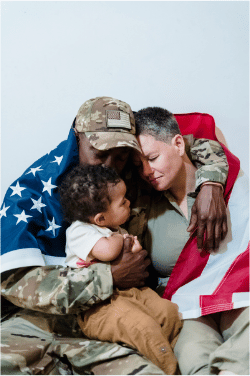
Veterans Day can be an opportunity to recognize military service, support veterans and their families, and reflect on the human costs of war. For some service members, religious ministry within military life also provides opportunities to serve others and offer spiritual support.
Honoring veterans and advocating for peace are not necessarily conflicting values. People can recognize the sacrifices of service members while holding different convictions about warfare.
Can Christians Support Both Peace and Military Service?
For many Christians, the answer is yes. They believe military service can be an act of protection and public service, especially when force is used to defend innocent lives.
Other Christians argue that rejecting violence is essential to following Jesus, even when that position requires personal sacrifice.
Neither perspective eliminates the difficult moral questions surrounding war.
Ultimately, the Bible challenges readers to consider not only whether force is justified, but also how they treat their enemies, protect vulnerable people, and pursue peace.
Put Your Faith Into Service
Whether your calling involves promoting peace, supporting your community, or helping loved ones celebrate meaningful milestones, ministry offers opportunities to serve others.
The Universal Life Church welcomes people of different faiths and beliefs to get ordained online for free. As an ordained minister, you can help create lasting memories by officiating weddings for friends or
family, or participate in other meaningful ceremonies.