Key Takeaways
- Religions and spiritual traditions around the world view fatherhood as a role centered on guidance, care, and personal transformation, not only providing for the family.
- Buddhism, Judaism, Christianity, and Islam emphasize teaching, compassion, devotion, and nurturing the next generation.
- Hinduism, Sikhism, and many Indigenous traditions expand fatherly responsibility beyond immediate family to include communities, future generations, and all living beings.
- Shinto and other ancestor-focused traditions teach that a father's influence can continue even after death through an ongoing spiritual connection.
- Wiccan and Pagan beliefs often connect fatherhood to the cycles of nature, renewal, sacrifice, and protection.
- Modern scientific research suggests that becoming a father can physically reshape the brain, reinforcing ancient ideas that fatherhood changes people from within.
- Despite their differences, these traditions share a common belief: fatherhood is defined by presence, responsibility, and a commitment to helping others thrive.
Most people know that faith traditions value fatherhood. But dig a little deeper, and the specifics get genuinely interesting: a 2,500-year-old checklist for dads, a ritual built entirely around children asking questions, a belief that deceased fathers are still active participants in family life.
Here are ten things different religions and traditions teach about fathers that you might not expect.
1. Buddhism: The 2,500-Year-Old Parenting Checklist
Buddhism isn't usually associated with practical parenting advice, but the Sigalovada Sutta lays out a father's duties with surprising precision. A father should restrain his child from wrongdoing, encourage them toward good, teach them a skill or trade, arrange a suitable marriage in due time, and pass on an inheritance.
It reads less like ancient scripture and more like a thoughtful parenting framework. One that's roughly 2,500 years old.
2. Hinduism: Your Kids Aren't Your Only Children
Most traditions frame fatherly responsibility in terms of one's own family. Hinduism goes further. The Taittiriya Upanishad includes the remarkable phrase: "May I be a father to all beings."
This reframes fatherhood as a universal posture of care and protection, not something that begins and ends with biology, but a way of moving through the world with responsibility toward all life.
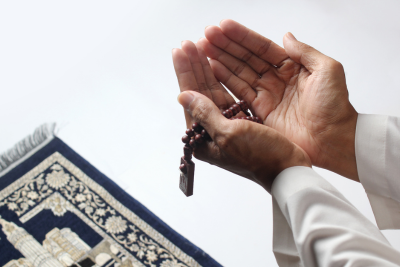 3. Islam: Bedtime Routines Are an Act of Worship
Islam draws a clear line between duty and devotion, and raising children sits firmly on the devotion side. Caring for a family is considered an act of ibadah, or worship, which is more than a moral obligation in Islamic teaching. Every patient moment, every sacrifice made for a child's wellbeing, is understood as spiritually meaningful.
The daily grind of fatherhood is reframed entirely. The mundane becomes sacred.
4. Judaism: The Ritual Designed Around Kids Asking Questions
The Passover Seder, one of Judaism's most widely observed traditions, is structured around a child asking four specific questions. The entire ritual exists so that parents have a framework for answering them, passing down history, faith, and identity across generations.
The teaching embedded here is that a father's most important role is to create the conditions where his children feel safe enough to ask.
5. Christianity: The Father Who Runs
The parable of the Prodigal Son in Luke 15 is one of the most recognized stories in the world. But the detail that often gets overlooked. The father sees his son returning "while he was still a long way off," meaning he was watching for him. And he runs. Before a single word of apology is spoken, the father is already moving.
In a culture where it was considered undignified for a man of status to run, this was a radical image. It’s an eager, unconditional welcome.
6. Indigenous Traditions: Fathering Children Who Don't Exist Yet
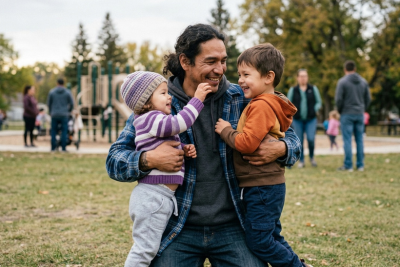
In numerous Indigenous traditions, particularly across North America, decision-making is guided by the principle of thinking seven generations ahead. The choices a father makes today are understood to ripple into the future to great-great-great-grandchildren who don't yet exist.
Fatherhood as an act of profound humility: recognizing that your role extends far beyond your own lifetime, and that what you steward is not really yours. You're holding it for the future.
7. Sikhism: Every Man Can Be a Father Figure
In Sikh teaching, God is often addressed as the ultimate parent of all, and the Sikh Gurus themselves are understood as spiritual fathers to the entire community, the Sangat. Fatherly care, including protecting, guiding, and elevating others, was never meant to stay within four walls.
For Sikhs, a man who serves his community selflessly expresses one of fatherhood's deepest qualities, whether or not he has biological children.
8. Shinto: Dad Never Really Leaves
Japanese Shinto tradition holds that ancestors, including deceased fathers, continue to exist as kami (spirits) who watch over and influence their families. Ancestor veneration is a living practice. Offerings are made, prayers are spoken, and the deceased are honored as presences, not just memories.
For families who practice Shinto, a father never fully leaves. He transitions into a different kind of presence.
9. Wicca: The Father Is Written Into the Seasons

In Wiccan and broader Pagan tradition, the masculine divine is a living presence tied to the natural world. The Horned God, one of Wicca's central figures, moves through an annual cycle: born at the Winter Solstice, reaching full strength at midsummer, and sacrificing himself in autumn so that life can begin again. It is fatherhood as a force of nature, generative, protective, and willing to give everything for the next generation.
For Wiccans, honoring a father is inseparable from honoring the earth. The two are the same story told in different ways.
10. Science: Fatherhood Rewires the Brain
This one isn't from a religious text, but it rhymes with what spiritual traditions have said for centuries. Research shows that when men become fathers, their brains physically change. Levels of oxytocin (the bonding hormone) rise, and in involved fathers, testosterone often decreases, associated with reduced aggression and increased nurturing behavior.
Traditions across the world have long described fatherhood as a transformation, a calling that reshapes a man from the inside out. It turns out biology agrees.
What All These Traditions Share
 Across Buddhism, Hinduism, Islam, Judaism, Christianity, Indigenous traditions, Sikhism, Shinto, and secular science, fatherhood is understood as something that changes the person who practices it. It demands more than provision. It asks for presence, patience, humility, and a willingness to think beyond yourself. Whatever tradition shapes your understanding of fatherhood, or none at all, that part seems to be universal.
Whether you're a father, reflecting on your own relationship with one, or simply exploring how different traditions understand family and spiritual responsibility, learning about these teachings often sparks a deeper curiosity about faith itself.
If you're interested in continuing that journey, getting ordained is free and takes only a few minutes. Ordination gives you access to a wide range of articles, guides, and resources covering diverse religious, spiritual, and cultural traditions, helping you keep learning, growing, and engaging with the questions that matter most.
Which of these perspectives surprised you most? And if you could borrow one idea from any of these traditions to carry into your own life, which would it be?
Frequently Asked Questions About Fathers in Different Religions
How does Buddhism view the role of a father?
Buddhism teaches that fathers have specific responsibilities toward their children, including guiding them away from wrongdoing, encouraging good behavior, teaching practical skills, helping prepare them for adulthood, and providing for their future. These teachings are outlined in the Sigalovada Sutta.
What does Hinduism teach about fatherhood?
Hindu teachings often extend fatherhood beyond biological relationships. Some texts encourage people to act with care and responsibility toward all living beings, viewing fatherhood as a broader expression of compassion and stewardship.
Is raising children considered a religious duty in Islam?
Yes. In Islam, caring for and raising children is often understood as an act of worship. Parents are encouraged to approach family responsibilities with patience, love, and dedication as part of their spiritual practice.
Why are children's questions important in Judaism?
Judaism places great value on teaching through dialogue. The Passover Seder is famously structured around questions asked by children, highlighting the importance of curiosity, learning, and passing traditions from one generation to the next.
What lesson about fatherhood comes from the Prodigal Son story?
The Christian parable of the Prodigal Son emphasizes forgiveness, compassion, and unconditional love. The father's eagerness to welcome his son home serves as a powerful model of grace and reconciliation.
How do Indigenous traditions connect fatherhood to future generations?
Many Indigenous traditions encourage people to consider how their actions will affect descendants far into the future. This long-term perspective teaches fathers to act as caretakers for generations they may never meet.
What role does fatherhood play in Sikhism?
Sikh teachings encourage all members of the community to care for and support others. Fatherly qualities such as guidance, protection, and selfless service are seen as virtues that can be expressed beyond biological parenthood.
How does Shinto view deceased fathers and ancestors?
In Shinto tradition, ancestors remain connected to their families and are honored through remembrance and ritual. Many practitioners believe that deceased family members continue to watch over future generations.
What does modern science say about becoming a father?
Research suggests that fatherhood can lead to measurable changes in the brain and hormone levels, supporting bonding, caregiving, and nurturing behaviors. These findings echo longstanding religious and cultural ideas that fatherhood transforms people from within.
What common theme appears across different traditions' views of fatherhood?
Despite their differences, many traditions teach that fatherhood involves more than providing material support. They emphasize qualities such as presence, sacrifice, responsibility, humility, guidance, and care for others.