
Key Takeaways
- A Doctor of Divinity, or D.D./D.Div., is commonly an honorary religious degree in the United States.
- An honorary degree does not require the same coursework, research, examinations, or dissertation associated with an earned doctorate.
- Some universities use Doctor of Divinity as a higher academic degree, so the meaning depends on the institution awarding it.
- The ULC Doctor of Divinity Degree is honorary and non-accredited.
- A religious degree is different from an ordination credential, which documents a minister's status with the church.
What Is a Doctor of Divinity Degree?
A Doctor of Divinity, often abbreviated D.D. or D.Div., is a religious degree or title associated with theology, ministry, spirituality, and the study of the divine.
In the United States, it is commonly awarded as an honorary religious degree, meaning the recipient does not complete a traditional doctoral program to receive it. Instead, the degree may recognize a person's ministry, spiritual interests, or contributions to religious life.
In some other academic settings, however, Doctor of Divinity can refer to a higher doctorate awarded for significant theological scholarship.
That distinction is important: an honorary Doctor of Divinity is not the same as an earned academic doctorate, and the two should not be represented as interchangeable.
Honorary vs. Earned Doctorate: What's the Difference?
The main difference is how the degree is obtained.
Honorary Degree
- Usually does not require formal coursework
- Does not require enrollment in a traditional doctoral program
- Usually does not involve exams or a dissertation
- Is typically awarded as recognition or a religious distinction
- May be non-accredited, depending on the awarding institution
Earned Academic Degree

- Requires formal admission to a degree program
- Involves graduate-level coursework
- Usually requires academic assessments, research, or both
- May require a dissertation or doctoral project
- Often takes several years to complete
- May be accredited when offered by an accredited institution
An earned doctorate certifies that someone completed a defined academic program.
An honorary doctorate serves a different purpose. Because it recognizes an individual rather than certifying completion of doctoral study, the usual academic requirements do not apply.
That is why the word honorary is important when describing the degree.
Is a Doctor of Divinity Always an Honorary Degree?
No. When evaluating a Doctor of Divinity degree, look at who awarded it and whether the institution describes it as earned or honorary.
Although Doctor of Divinity is commonly an honorary title in the United States, the abbreviation alone does not tell you whether a particular degree was earned or honorary.
Some universities have historically treated the D.D. as an advanced or higher doctorate based on substantial theological scholarship.
What Is an Honorary Doctor of Divinity Degree?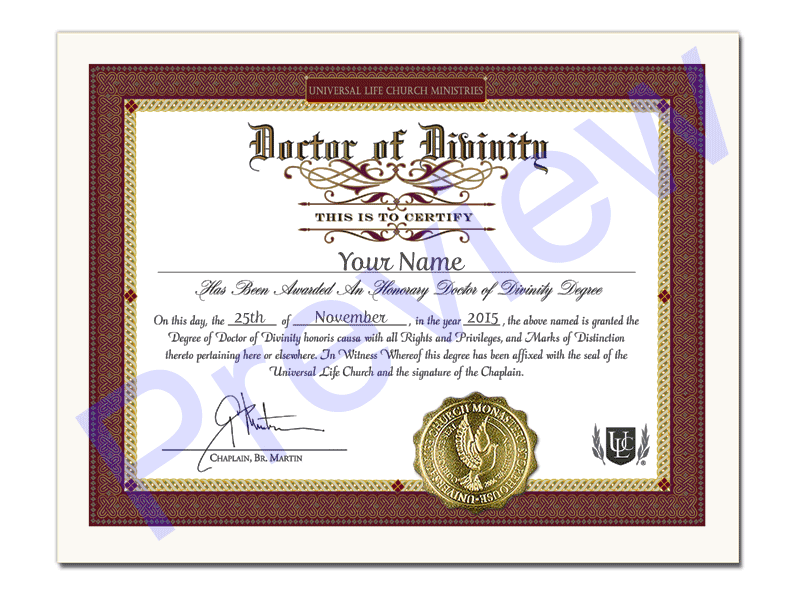
An honorary Doctor of Divinity recognizes someone's religious or spiritual interests, ministry, experience, or commitment to exploring questions of faith and divinity without requiring completion of a traditional doctoral program.
Different churches and institutions establish their own purposes and standards for awarding honorary religious degrees.
The ULC offers its ministers an honorary Doctor of Divinity Degree for those interested in exploring questions of spirituality, religion, and the divine.
The degree includes a personalized certificate along with the ULC's Guide to Divinity, making it a tangible way for ministers to recognize this part of their spiritual journey.
Is an Honorary Doctor of Divinity the Same as a Ph.D., Th.D., or D.Min.?
No.
A Ph.D. in theology or religious studies is generally a research-focused academic doctorate.
A Doctor of Theology (Th.D.) is another earned research doctorate found in theological education.
A Doctor of Ministry (D.Min.) is typically a professional doctorate for experienced ministers that combines advanced theological education with research or a ministry-focused project.
These programs require formal academic study.
An honorary Doctor of Divinity does not represent completion of the same type of doctoral program.
Can Someone With an Honorary Doctorate Call Themselves "Doctor"?
Practices vary between institutions and religious communities, but transparency is important.
Some organizations allow recipients to use an honorary title within a religious or ministerial setting. In academic or professional contexts, however, using "Dr." without explaining that the degree is honorary could lead people to assume that an accredited doctoral program was completed.
A good rule is simple:
Do not present an honorary degree in a way that suggests you earned an academic doctorate if you did not.
If you list an honorary Doctor of Divinity in a biography, ministry profile, or other public material, identifying it as honorary makes the nature of the title clear.
Doctor of Divinity Degree vs. Ordination Credentials
A religious degree and an ordination credential serve different purposes.
A Doctor of Divinity certificate recognizes an honorary religious title. An ordination credential, on the other hand, documents your status as a minister.
For ULC ministers, the Credential of Ministry provides physical documentation of ordination. Ministers who prefer a more formal presentation can also choose the Premium Credential of Ministry.
This distinction can be particularly important when performing weddings. Depending on the location, ministers may be asked to provide proof of ordination or other documentation.
An honorary Doctor of Divinity degree does not replace your ordination credentials.
Are There Other Types of Honorary Religious Degrees?
Yes. Honorary religious titles can reflect different areas of spiritual interest.
In addition to the Doctor of Divinity, ULC ministers can explore an Honorary Religious Degree offering several other religious titles.
Those interested in metaphysical questions may prefer the Doctor of Metaphysics Degree, while ministers following Wiccan spiritual traditions can explore the Wiccan Master's Degree.
As with the ULC Doctor of Divinity, these are honorary religious degrees rather than accredited academic degrees.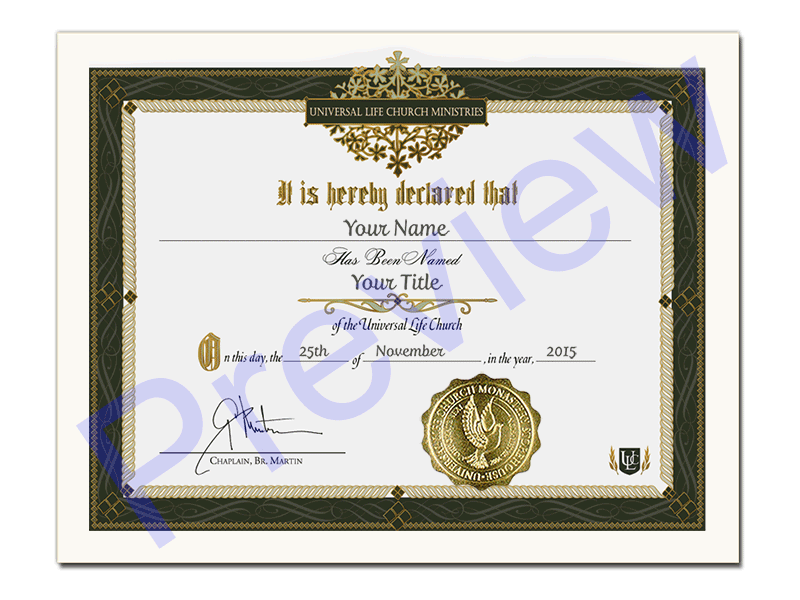
How Can Ministers Display Their Degree or Credentials?
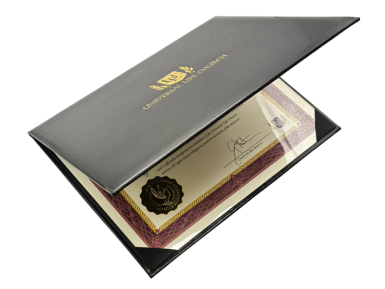
Some ministers frame their religious degrees or ordination certificates for an office or ministry space, while others prefer to keep important documents together for ceremonies and other ministry work.
A certificate holder, such as the Official Certificate Holder and Premium Certificate Holder, can help protect and present these documents.
Explore Degrees, Credentials, and Ministry Resources
Every minister's path is different. Some need documentation of their ordination, while others are looking for resources that recognize their spiritual interests or help them develop their ministry.
Explore the ULC Minister Store to find honorary religious degrees, ministry credentials, ceremony supplies, clergy apparel, books, and other resources for your ministry.
Not a ULC minister yet? You can also become ordained online for free before beginning your ministry.
Frequently Asked Questions About Doctor of Divinity Degrees
Is a Doctor of Divinity a real degree?
Doctor of Divinity is a degree title used by religious institutions and universities, but its meaning depends on the institution awarding it.
Some Doctor of Divinity degrees are honorary, while certain universities have used the D.D. as a higher academic doctorate. Check whether a particular degree is earned, honorary, accredited, or non-accredited.
Is the ULC Doctor of Divinity accredited?
No. The ULC Doctor of Divinity is an honorary religious degree and is not accredited. It should not be represented as equivalent to an earned academic doctorate.
Do you have to attend seminary to receive an honorary Doctor of Divinity?
Not necessarily. An honorary Doctor of Divinity generally does not require completion of a seminary doctoral program.
An earned doctorate in theology or ministry, by comparison, normally requires formal graduate-level study.
ULC ministers are also encouraged to continue learning on their own terms. The ULC Minister Store offers religious texts, theology books, ministry guides, and other resources for self-directed study.
Is a Doctor of Divinity the same as a Doctor of Ministry?
No. A Doctor of Ministry, or D.Min., is typically an earned professional doctorate requiring graduate-level study and a substantial ministry project or research component.
An honorary Doctor of Divinity does not require completion of that type of academic program.
Does a Doctor of Divinity make you an ordained minister?
No. Receiving a religious degree and becoming ordained are separate processes.
At the ULC, ordination establishes your status as a minister. A Credential of Ministry documents that status, while an honorary Doctor of Divinity represents an additional religious title.
Where can I get an honorary Doctor of Divinity degree?
Ordained ULC ministers can request the ULC Doctor of Divinity Degree through the ULC Minister Store. It is an honorary, non-accredited religious degree and includes a personalized certificate.