 Key Takeaways
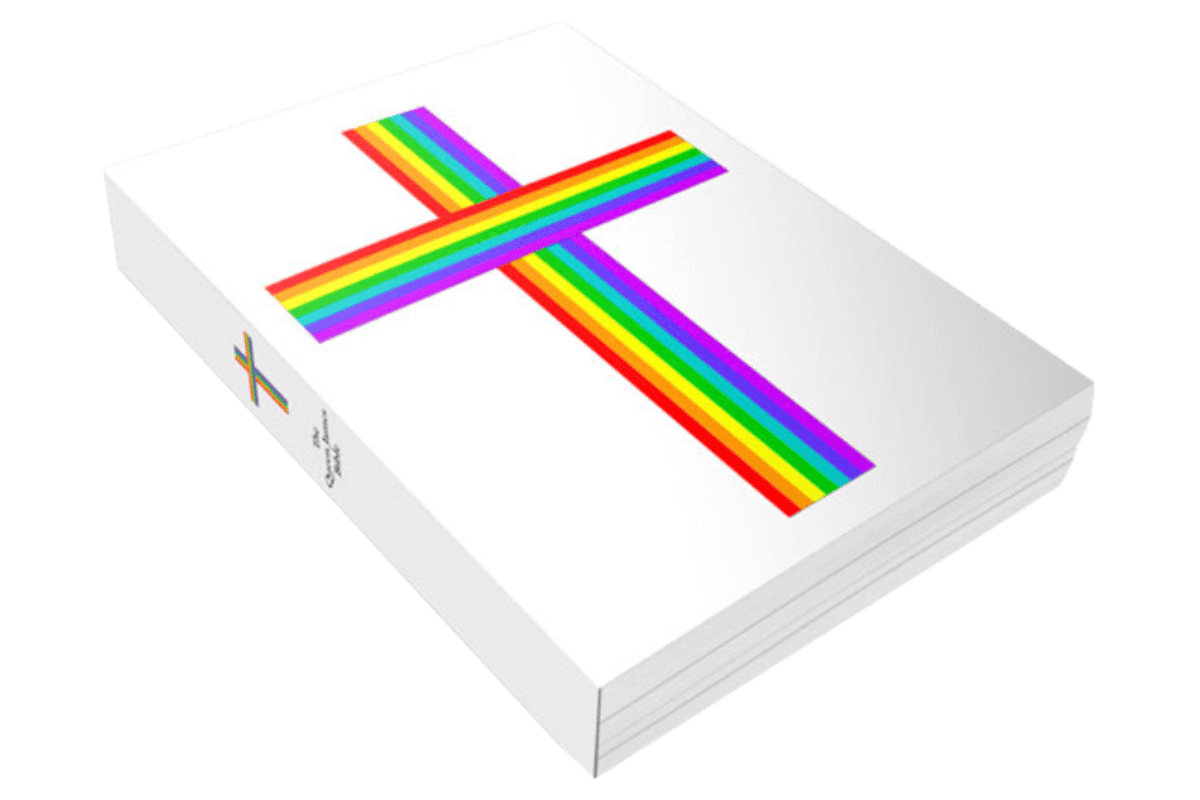
- The Queen James Bible (QJB) is a 2012 LGBTQ-affirming revision based largely on the King James Version.
- It is not a completely new Bible translation. Its editors changed eight passages commonly cited in debates about homosexuality.
- The anonymous editors said their goal was to prevent what they considered homophobic interpretations of those passages.
- Supporters see the QJB as an LGBTQ-affirming approach to Scripture, while critics argue that it changes biblical text to support a predetermined interpretation.
- The debate ultimately raises a larger question: Where does biblical translation end and interpretation begin?
What Is the Queen James Bible?
The Queen James Bible, or QJB, is a 2012 LGBTQ-affirming revision of the King James Version created to address how certain biblical passages have been interpreted on homosexuality.
It is not a completely new Bible translation. Instead, it preserves most of the KJV while revising eight passages commonly cited in debates about same-sex sexual behavior in the Bible.
Its editors said the goal was to resolve what they viewed as “interpretive ambiguity” in those passages. Those targeted changes have made the QJB both influential and controversial.
Queen James Bible vs. King James Bible: What's the Difference?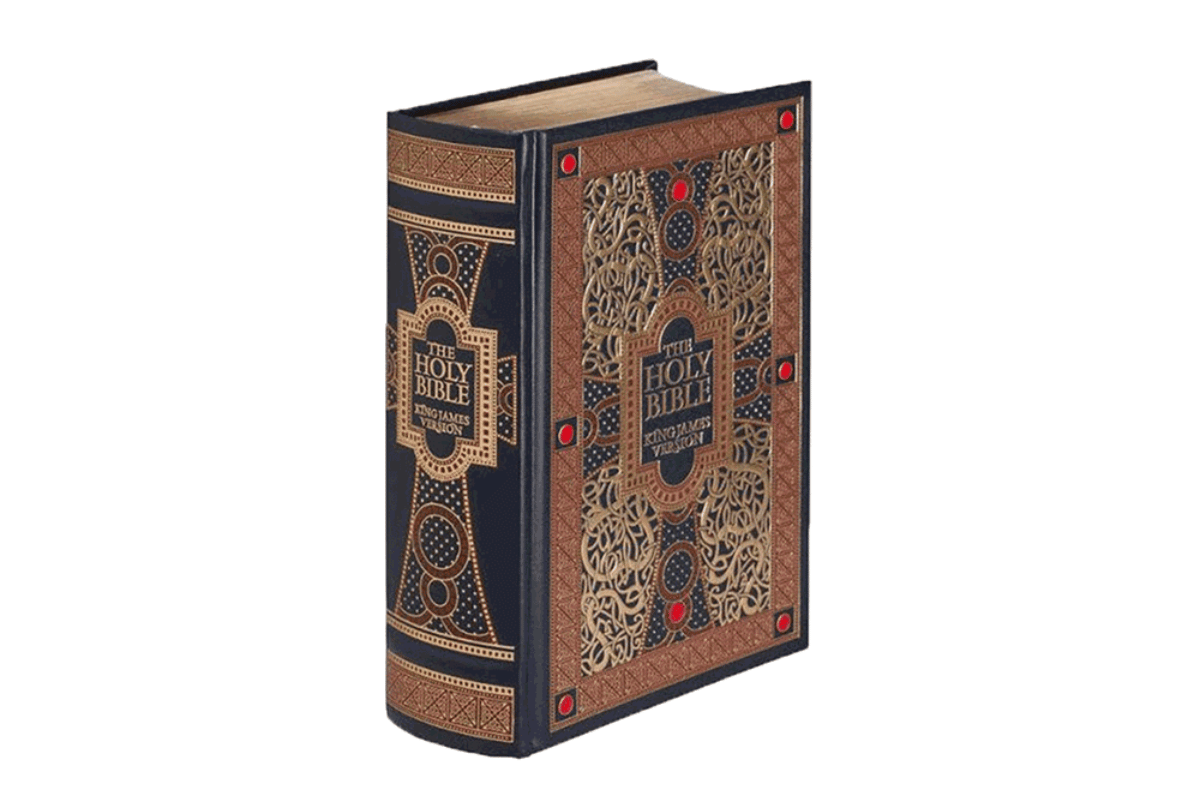
The two Bibles are much more alike than their names suggest.
- First published: The King James Version was first published in 1611, while the Queen James Bible was published in 2012.
- Origin: The KJV was translated into English from earlier biblical texts, while the QJB is a revision based on the KJV.
- Translators and editors: The KJV was produced by committees of scholars. The Queen James Bible's editors remain anonymous.
- Overall text: The QJB preserves most of the traditional KJV wording.
- LGBTQ-related passages: The QJB revises eight passages commonly cited in debates about homosexuality.
- Purpose: The KJV was created as an English translation of Scripture, while the QJB was designed specifically to address interpretations of passages concerning homosexuality.
The King James translation emerged from a project approved by King James I in 1604 and was first printed in 1611. Oxford scholarship traces the KJV's textual development from that first edition to the standardized text established in 1769.
The Queen James Bible is better understood as a targeted revision of the KJV than as a completely independent translation.
What Verses Did the Queen James Bible Change?
The Queen James Bible revises eight passages:
- Genesis 19:5
- Leviticus 18:22
- Leviticus 20:13
- Romans 1:26
- Romans 1:27
- 1 Corinthians 6:9
- 1 Timothy 1:10
- Jude 1:7
Rather than removing these verses, the QJB changes their wording or context.
Sodom and Gomorrah: Genesis 19 and Jude 1:7
Genesis 19 recounts the story of Sodom, where a mob demands access to Lot's male visitors.
The Queen James Bible interprets the episode specifically around rape, violence, and humiliation, rather than consensual same-sex relationships.
Jude 1:7 also refers back to Sodom. The QJB interprets its reference to “strange flesh” in light of the visitors in Genesis being angels rather than as a general condemnation of homosexuality.
Leviticus 18:22 and 20:13
These are among the verses most frequently quoted in debates about homosexuality.
The Queen James Bible adds context connecting the prohibitions to pagan religious practices and idolatry, narrowing their meaning rather than treating them as universal condemnations of sexual relationships between men.
Critics contend that this adds concepts not explicitly present in the Hebrew wording. Supporters argue that historical and religious context is necessary to understand what the prohibition originally addressed.
Romans 1:26-27
Romans describes men and women exchanging what Paul calls natural relations for those “against nature.”
The QJB emphasizes the surrounding discussion of idolatry and pagan practices, interpreting the passage within that context rather than as a blanket statement about homosexuality.
1 Corinthians 6:9 and 1 Timothy 1:10
These passages are particularly important because translators have long debated how to render certain Greek terminology, especially malakoi and arsenokoitai.
The KJV used phrases such as “effeminate” and “abusers of themselves with mankind.” Some later Bible translations have used terminology referring more directly to homosexuality or same-sex sexual behavior.
The QJB interprets the words more narrowly.
That disagreement illustrates one of the central issues surrounding the Queen James Bible: translating ancient sexual terminology into modern English inevitably involves interpretation.
Was Homosexuality Added to the Bible in 1946?
No. The 1946 Revised Standard Version New Testament is widely cited as the first English Bible translation to use the word “homosexual” in 1 Corinthians 6:9, but earlier Bibles already contained passages addressing same-sex sexual behavior using different terminology.
The debate is whether a modern term describing sexual orientation accurately reflects the meaning of the original Greek.
In short, 1946 changed the English terminology, not the underlying biblical passages.
Why Is It Called the Queen James Bible?
The title is first and foremost a play on King James Bible.
But the editors also connect the name to the personal life of King James I, who commissioned the translation project that produced the KJV.
James had notably intimate relationships with several male courtiers, particularly George Villiers, Duke of Buckingham. Surviving correspondence between the two includes remarkably affectionate language.
The Queen James Bible's editors describe James as bisexual. However, historians are more cautious about applying modern sexual-orientation labels to a monarch who lived four centuries ago. Scholars continue to debate whether James' relationships with male favorites were sexual or intensely affectionate but nonsexual.
So the claim that “King James was gay” is more complicated than the catchy Queen James name suggests.
Who Wrote the Queen James Bible?
The identities of its editors have not been publicly disclosed.
The official Queen James Bible website refers collectively to its “editors” without naming an individual translator or translation committee.
That anonymity has fueled criticism because readers cannot easily evaluate the editors' academic credentials or translation methodology.
It also separates the project from major Bible translations produced by publicly identified teams of biblical scholars.
Why Is the Queen James Bible Controversial?
Most of the controversy comes down to one question: Is the Queen James Bible translating Scripture or interpreting it?
Critics argue that the QJB begins with the conclusion that homosexuality should not be condemned and then revises the relevant passages to support that position. Common objections include:
- its editors are anonymous;
- only LGBTQ-related passages were targeted;
- some revisions add context not explicitly stated in the underlying text; and
- it was not produced by a major denomination or publicly identified translation committee.
The QJB is also based overwhelmingly on an existing English Bible rather than independently translating the full text from Hebrew and Greek. For critics, that makes it better described as a theological revision than a new Bible translation.
Supporters see the issue differently. Every translator must decide how ancient words and concepts should be expressed in modern English, especially when ideas involving sex, gender, marriage, and social status do not have exact modern equivalents.
From this perspective, the Queen James Bible does something all translations do to some degree: interpret the text while translating it. The difference is that the QJB makes its theological objective unusually explicit.
The disagreement reflects a broader divide within Christianity. Some LGBTQ-affirming faith communities support LGBTQ clergy and same-sex marriage, while others maintain traditional teachings on sexuality.
Ultimately, the Queen James Bible raises a larger question that applies to Bible translation generally:
How much interpretation should translators put into the text itself?
Explore Faith on Your Own Terms
Whatever your interpretation of these passages, the Universal Life Church supports each person's right to explore faith and belief for themselves.
You can add a Queen James Bible to your shelf for a closer look at its approach to Scripture, or become an ordained minister online for free if you feel called to serve others through weddings, blessings, and other meaningful ceremonies.
Frequently Asked Questions About the Queen James Bible
Is the Queen James Bible a parody?
No. Despite its playful name, the Queen James Bible is a serious LGBTQ-affirming revision of the King James Version created to address interpretations of biblical passages concerning homosexuality.
Does the Queen James Bible remove verses?
No. It retains the disputed passages but changes the wording or context of eight verses so they cannot easily be interpreted as broad condemnations of homosexuality.
When was the Queen James Bible published?
The Queen James Bible was first published on November 7, 2012.
Who created the Queen James Bible?
Its editors have remained anonymous. The project's official website does not identify an individual author or translation committee.
Is the Queen James Bible an official Bible translation?
There is no single authority that declares Bible translations “official” for Christianity as a whole. However, the Queen James Bible was not commissioned by a major denomination and is not widely used as a standard church translation.
Is the Queen James Bible widely used?
The Queen James Bible has not become a mainstream church translation comparable to the KJV, NIV, NRSV, or ESV. Its influence is more prominent in discussions about LGBTQ Christianity, biblical translation, and the interpretation of disputed passages.
Where can I get a Queen James Bible?
The Queen James Bible remains commercially available, including through the Universal Life Church Minister Store.