Key Takeaways
- Whether you can officiate your own wedding depends on your state's marriage laws.
- Self-solemnization allows couples to marry without a traditional officiant and is recognized in several states and the District of Columbia.
- Even if you can self-officiate, you'll still need to obtain and properly file a valid marriage license.
- If your state doesn't allow self-solemnization, a friend or family member may be able to officiate after becoming ordained.
- Always check your state wedding laws before making plans, as requirements vary by state and county.
Is It Legal to Officiate Your Own Wedding?
If you're wondering whether you can legally officiate your own wedding, the answer depends entirely on where you're getting married. While most states require an authorized officiant, a handful recognize self-solemnization, allowing couples to marry without one.
This guide explains where self-solemnization is legal, how it works, what paperwork you'll need, and your options if your state requires an officiant.
What Is Self-Solemnization?
Self-solemnization allows a couple to legally marry without a minister, judge, or other traditional officiant. In jurisdictions that recognize it, the couple solemnizes the marriage themselves by following the state's legal requirements and completing the required paperwork.
If self-solemnization isn't available where you're getting married, learn who can legally officiate a weddingto explore your alternatives.
Where Is Self-Solemnization Legal?
As of this writing, the following states and jurisdictions recognize some form of self-solemnization. Since requirements vary, always review your state wedding laws before making final plans.
California
Recognized, although some counties may have additional procedures.
Colorado
Couples generally do not need an officiant.
Illinois
Permitted under specific legal provisions.
Kansas
Recognized under state law.
Maine
Available in certain circumstances; check with your local clerk.
Nevada
Permitted under state law.
Pennsylvania
Recognizes self-uniting marriages, historically associated with the Quaker tradition.
Wisconsin
Allowed in certain situations, subject to local requirements.
District of Columbia
Recognizes ceremonies performed by the couple themselves.
What Paperwork Do You Need?
Before your ceremony, make sure you:
- Obtain your marriage license from the appropriate county or local office.
- Verify your state's requirements, including any waiting periods, witness requirements, or additional forms.
- Complete and sign the marriage license according to your state's instructions immediately after the ceremony.
- Return the completed license to the issuing office before the filing deadline.
- Confirm whether your county requires additional self-solemnization paperwork, as some jurisdictions have extra forms or procedures.
If you're unfamiliar with the process, our guide to getting a marriage license explains what documents you'll typically need before the ceremony.
What If Your State Doesn't Allow Self-Officiating?
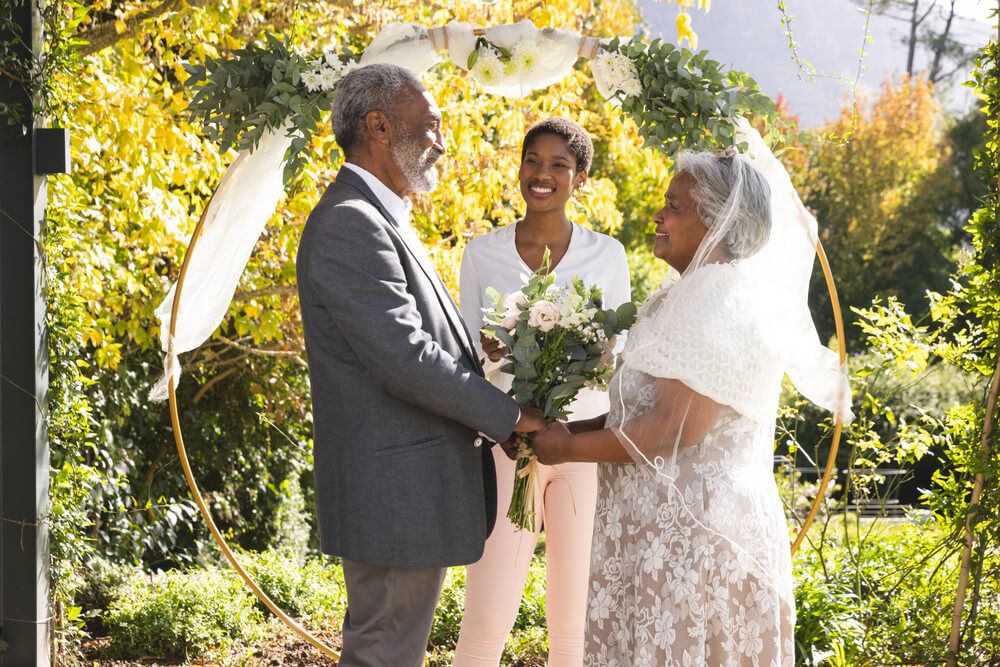
Many couples ask a loved one to officiate instead. You can still personalize nearly every part of the ceremony using our wedding ceremony scripts and your own vows, readings, and traditions.
Thinking About Self-Officiating?
Self-solemnization isn't the right choice for every couple. If you're still deciding, consider the pros and cons of self-solemnization to weigh the practical, emotional, and logistical considerations before making your decision.
Do You Need to Be Ordained to Officiate Your Own Wedding?
No. In states that recognize self-solemnization, your authority comes from state law rather than ordination.
However, if your state requires an officiant, asking a friend or family member to become ordained is one of the easiest ways to keep your ceremony personal. Our guide to officiating a friend's wedding explains the entire process. They can get ordained online for free through the Universal Life Church and legally officiate your wedding in many states.
Frequently Asked Questions About Officiating Your Own Wedding
Can you officiate your own wedding if you're already ordained?
Generally, no. Becoming ordained doesn't automatically allow you to officiate your own wedding. Whether you can self-officiate depends on your state's marriage laws, not your ordination status. However, if your state requires an officiant, your ordination may allow you to officiate weddings for others, subject to state and local requirements.
Do you need witnesses for a self-officiated wedding?
It depends on the state. Some states require one or more witnesses to sign the marriage license, while others do not. Witness requirements are separate from self-solemnization laws, so be sure to check the rules where you'll be getting married before your ceremony.
Is a self-officiated marriage recognized in every state?
Yes. As long as your marriage was legally performed according to the laws of the state where it took place, it is generally recognized throughout the United States under the Full Faith and Credit Clause. The key is ensuring that all legal requirements were properly followed.
Can you have a self-officiated wedding with guests?
Absolutely. Self-solemnization doesn't mean your wedding has to be private. Many couples invite family and friends to witness the ceremony while exchanging vows without a traditional officiant. Others choose a more intimate elopement with only a few guests or none at all.
Can you personalize your ceremony if someone else officiates?
Yes. Even if your state requires an officiant, you still have complete control over the ceremony itself. You can refer to ULC’s wedding planning resources to write your own vows, choose meaningful readings, include symbolic rituals, and customize the ceremony to reflect your relationship while someone else handles the legal responsibilities.
Can a friend or family member legally officiate my wedding?
In many states, yes. A friend or family member can often become ordained online and legally perform your wedding, provided they meet your state's requirements. This allows you to have a highly personal ceremony while satisfying legal requirements.
Are self-solemnization and self-uniting marriage the same thing?
In most cases, yes. The two terms are often used interchangeably to describe a marriage ceremony performed by the couple without a traditional officiant. Some states use one term in their statutes while others use the other, but both generally refer to the same legal concept.
Where can I verify my state's current marriage requirements?
Marriage laws can change, and requirements sometimes vary by county. Before making wedding plans, check with the county clerk or office issuing your marriage license and review your state's marriage laws to confirm the latest rules regarding self-solemnization, witnesses, filing deadlines, and officiant requirements.