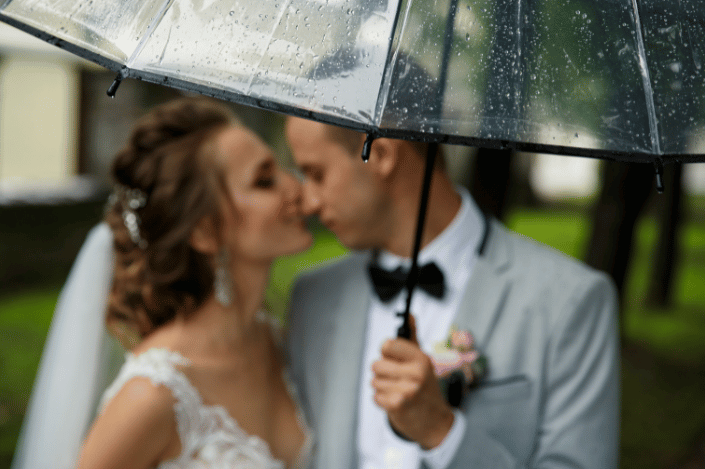
 Rain, spiders, birds, and even black cats have all been considered lucky wedding signs in different traditions. Here are eight wedding-day omens and what they are believed to mean.
Key Takeaways
- Rain, spiders, birds, black cats, and even chimney sweeps have been considered lucky wedding omens in different traditions.
- Many wedding good-luck beliefs are rooted in folklore rather than religious doctrine or proven predictions.
- The meaning of an omen can change between cultures, so something considered lucky in one tradition may mean something entirely different in another.
- Couples can enjoy wedding superstitions as traditions without treating them as predictions about their marriage.
1. Rain on Your Wedding Day
Isn’t it ironic? A rainy forecast does not necessarily spell disaster. In fact, rain is one of the most famous wedding good-luck signs.
Traditions connecting wedding-day rain with good fortune often associate water with fertility, renewal, abundance, and new beginnings. Another popular explanation connects rain with the phrase “tying the knot”: a wet knot can be harder to untie, making rain a symbolic sign of a strong marriage.
So if clouds appear before the ceremony, there may be no reason to panic. Have a backup plan for the weather, then embrace the symbolism.
2. Finding a Spider on the Wedding Dress
Finding a spider on a wedding dress has traditionally been regarded as a sign of good fortune in English folklore. Collections of wedding superstitions have preserved variations of this belief for generations.
Historical Irish folklore records a similar belief, describing a spider found in the folds of a bride's dress as a sign that she would have abundance in married life.
You do not have to leave your eight-legged guest on the dress, of course. Consider the good omen received, then carefully relocate it.
3. Waking Up to Birds Singing
If birds wake you on your wedding morning, folklore suggests you might want to forgive the early alarm.
Records preserved by Ireland's National Folklore Collection describe waking to birdsong on the morning of a wedding as a sign of good luck.
Birds have taken on many symbolic meanings across religions and cultures, including freedom, hope, peace, and renewal. The exact meaning varies widely, but hearing birds sing at the start of a wedding day has appeared in traditional wedding lore as an auspicious beginning.
4. Encountering a Black Cat
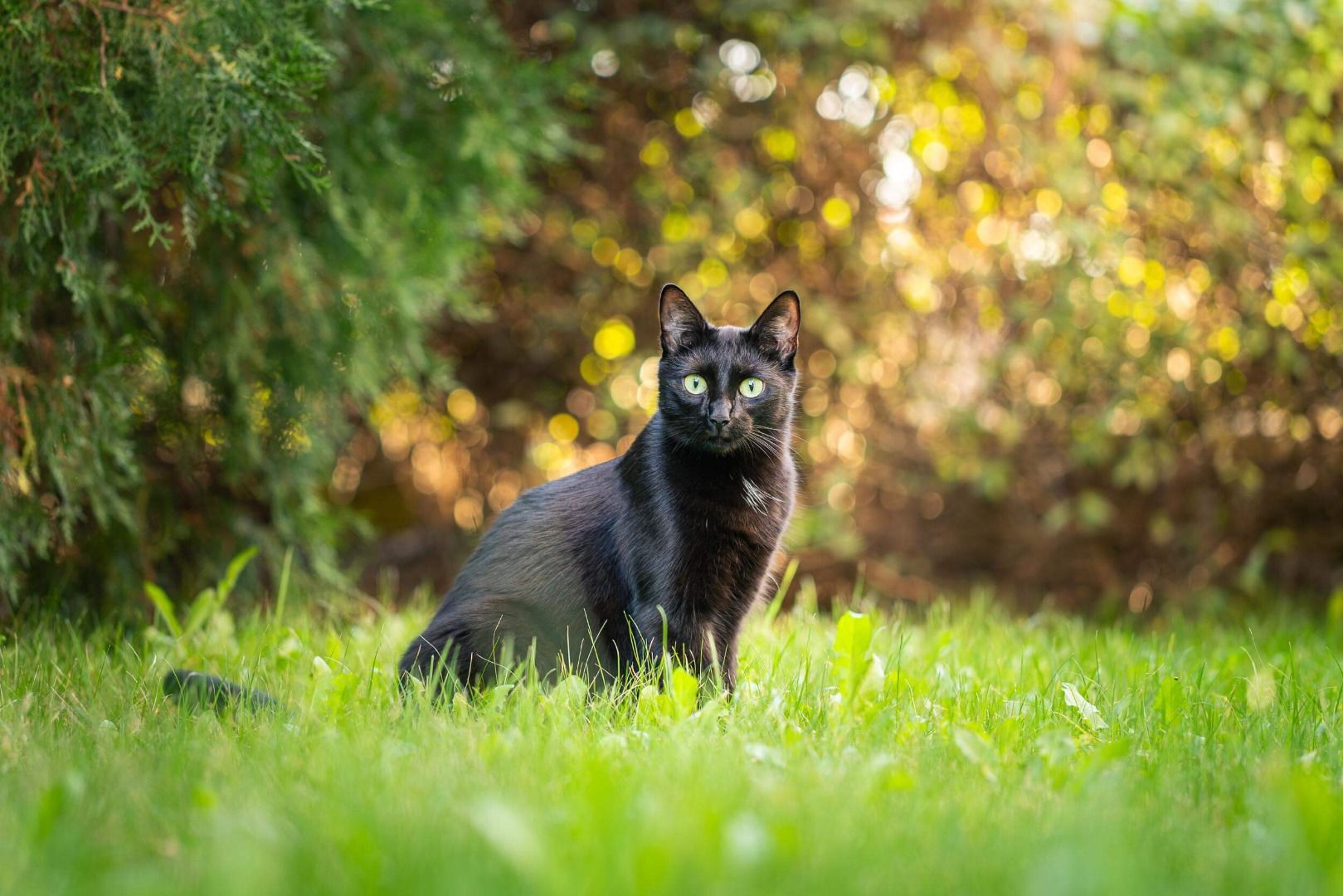
Black cats have one of folklore's most complicated reputations.
In some traditions, they are associated with bad luck, but elsewhere the opposite is true. English traditions have linked black cats with good fortune for brides, while Scottish folklore has associated a black cat arriving at a home with prosperity.
Irish folklore collections also record the belief that a black cat rubbing against a bride could signal good luck.
So a black cat wandering past the wedding venue does not have to be an ominous sign. Depending on which tradition you follow, it could mean precisely the opposite.
5. Meeting a Chimney Sweep
Seeing a chimney sweep on your wedding day may sound like an oddly specific omen, but it has a long history in European wedding folklore.
In Britain and other parts of Europe, chimney sweeps have traditionally been associated with good luck. The superstition became especially connected with weddings, where encountering or shaking hands with a sweep after the ceremony was regarded as auspicious.
The origins are uncertain, although several legends attempt to explain the association. One story involves a chimney sweep rescuing King George III from a runaway horse. Another tells of a sweep rescued from danger by a woman he later married.
Some couples have even invited chimney sweeps to weddings specifically to continue the custom.
6. Seeing a Horseshoe
Few objects say “good luck” quite as clearly as a horseshoe.
Horseshoes have a particularly strong connection with Irish and British wedding traditions. Brides have historically carried them or incorporated horseshoe imagery into bouquets and wedding accessories as symbols of good fortune.
One traditional detail concerns which way the horseshoe faces. With the open ends pointing upward, folklore says it can “hold” the couple's luck rather than allowing it to run out.
7. Hearing Wedding Bells
Wedding bells are more than an announcement that the ceremony is over.
In Irish wedding tradition, ringing bells has been associated with driving away harmful spirits and wishing good fortune upon the newlyweds. Bells can therefore symbolize protection as the couple begins married life together.
Some couples continue the custom by giving small bells to their guests to ring as they leave the ceremony.
Of course, bells do not need to carry a supernatural meaning. They can simply serve as a joyful sound marking a major transition in the couple's lives.
8. Being Showered With Rice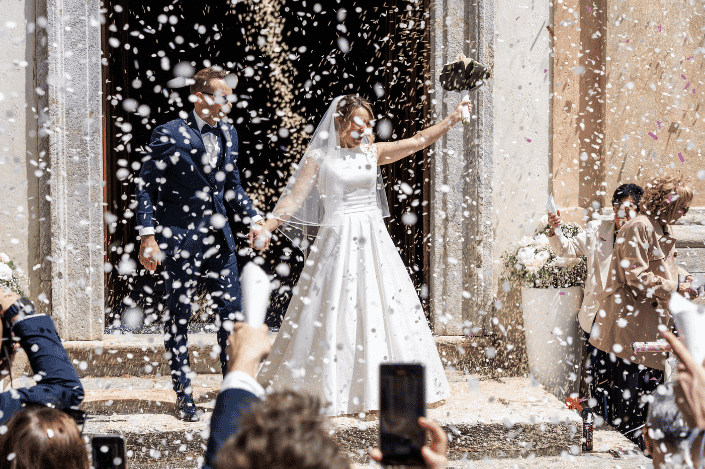
Being showered with rice after the ceremony is another familiar wedding image with older symbolic roots.
Rice and other grains have historically represented fertility, abundance, and prosperity. Smithsonian notes that rice has played symbolic roles in multiple wedding traditions, although its meaning differs between cultures. In some Western traditions, it represented fertility, while rice in Hindu wedding ceremonies can symbolize sustenance and blessing.
Modern couples often substitute flower petals, bubbles, confetti, or other send-offs, especially when venues restrict rice.
Whatever is tossed, the basic idea remains familiar: loved ones sending the newlyweds into married life surrounded by good wishes.
Do Wedding Good-Luck Signs Really Predict a Happy Marriage?
There is no evidence that rain, spiders, cats, or any other wedding omen can predict whether a marriage will succeed.
These beliefs are better understood as folklore and cultural traditions. They reveal what different communities have associated with marriage over time, from fertility and prosperity to protection, endurance, and new beginnings.
And wedding folklore is not always consistent. The same animal, weather event, color, or wedding day can represent good luck in one tradition and bad luck in another.
Make Your Own Good Luck on the Wedding Day
Lucky signs can add a little fun and symbolism to a wedding, but the people involved are what make the day memorable.
One way to make a ceremony especially personal is to have someone who genuinely knows and loves the couple stand beside them as officiant. If a friend or family member has asked you to perform their wedding, you can get ordained online through the Universal Life Church and prepare to help make their big day official.