 Key Takeaways
- The ULC Religious Symbols Stole features symbols representing a wide range of religious and nonreligious traditions.
- A minister stole is ceremonial attire, not a legal requirement for performing weddings.
- A multi-faith stole can be especially useful for interfaith, non-denominational, and diverse ceremonies.
- The ULC also offers a simpler Ceremonial Minister Stole for ministers who prefer a more traditional or understated look.
- Ministers can find stoles, clergy apparel, credentials, ceremony supplies, and other resources in the ULC Minister Store.
A Stole That Represents Many Beliefs
A cross, an Om, a pentacle, a Star of David, and a yin-yang symbol rarely appear together on the same piece of clothing.
On the Universal Life Church's Religious Symbols Stole, however, that is precisely the point.
The white minister stole brings together symbols representing religious, spiritual, philosophical, and non-theistic traditions. For ULC ministers, it can serve two purposes at once: identifying the person leading a ceremony and expressing respect for the many different beliefs of the people gathered there.
That can be especially useful when officiating an interfaith wedding, memorial, vow renewal, blessing, or other ceremony where no single tradition represents everyone in the room.
But what do all the symbols actually mean?
Why Do Ministers Wear Stoles?
A stole is a long ceremonial garment traditionally worn around the neck, with the ends hanging down the front. Stoles have a long history as clergy vestments, although their use and meaning vary among religious traditions.
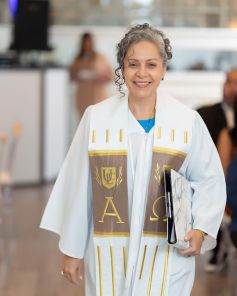
For a ULC minister, wearing one is optional. A stole does not make someone ordained or give an officiant legal authority to perform a wedding. Instead, it can visually indicate the role the minister is fulfilling.
That distinction can be useful during a ceremony. If a friend or family member is officiating a wedding, for example, they may otherwise look like any other guest. A stole can subtly signal, both to attendees and in photographs, that this is the person leading the ceremony.
Ministers can also choose attire based on the tone of the event, from ordinary formalwear to clergy shirts, robes, and ceremonial accessories.
 What Religious Symbols Are on the ULC Stole?
The ULC Religious Symbols Stole features the Universal Life Church crest alongside symbols representing numerous religious and philosophical traditions.
Here is what some of the most recognizable symbols represent.
1. Christian Cross
The cross is one of the world's most recognizable religious symbols. It represents Christianity and recalls the crucifixion of Jesus Christ, as well as Christian belief in his resurrection.
For many Christians, it represents faith, sacrifice, redemption, and hope.
2. Hindu Om
Om, sometimes written Aum, is a sacred sound and symbol with deep roots in Hindu tradition.
It can represent ultimate reality, consciousness, and the universe itself. The symbol also appears in other South Asian religious traditions.
3. Buddhist Dharma Wheel
The Dharma Wheel, or Dharmachakra, is one of the best-known symbols of Buddhism.
Its eight spokes are commonly associated with the Noble Eightfold Path, a central Buddhist teaching describing a path toward wisdom, ethical conduct, and mental discipline.
4. Jewish Star of David
The six-pointed Star of David, also called the Magen David, is widely recognized as a symbol of Judaism and Jewish identity.
Although the hexagram existed before becoming closely associated with Judaism, it eventually became one of the faith's most recognizable emblems.
5. Islamic Crescent Moon
The crescent moon, often shown with a star, is widely associated with Islam today.
Islam does not have one universally prescribed official symbol. The crescent developed its association with Muslim cultures over centuries and is now commonly used to represent the Islamic faith.
6. Sikh Khanda
The Khanda is one of the most recognizable symbols of Sikhism.
Its design combines a central double-edged sword, a circular chakkar, and two curved swords. These elements are associated with concepts including unity, divine knowledge, and the relationship between spiritual and temporal life.
7. Wiccan Pentacle
The pentacle, a five-pointed star enclosed within a circle, is commonly associated with Wicca and other Pagan traditions.
Interpretations vary, but its five points are often connected with earth, air, fire, water, and spirit. The surrounding circle may represent unity, wholeness, or balance.
8. Taoist Yin-Yang
The familiar yin-yang symbol depicts two complementary forces forming a unified whole.
In Taoist thought, it can express the idea that apparently opposite qualities, such as light and dark or activity and stillness, are interconnected rather than simply opposed.
9. Bahá'í Nine-Pointed Star
The nine-pointed star is commonly associated with the Bahá'í Faith.
Nine has special significance within the Bahá'í tradition, and the star is often used to express ideas of completeness, unity, and the interconnectedness of humanity.
10. Shinto Torii
A torii is the distinctive gate commonly found at the entrance to a Shinto shrine in Japan.
Passing through a torii traditionally marks a transition from ordinary surroundings into sacred space, making it one of the most recognizable visual representations of Shinto.
11. Confucian Symbol
Unlike some religions, Confucianism does not have one universally recognized symbol.
Symbols used to represent the tradition generally point toward its broader emphasis on learning, ethical conduct, responsibility, relationships, and social harmony.
12. Humanist Symbol
Humanism emphasizes human dignity, ethical responsibility, reason, and people's ability to create meaningful lives.
A humanist symbol gives people with a non-theistic worldview a place alongside traditional religions in the ULC's collection of beliefs and perspectives.
13. Atheist Symbol
Atheism is not a religion, and there is no single symbol accepted by all atheists.
Its inclusion nevertheless reflects an important part of the Universal Life Church's philosophy: people may follow religious, spiritual, philosophical, or non-theistic paths.
Why Put So Many Religious Symbols on One Stole?
Seen individually, each symbol represents a particular tradition or worldview.
Seen together, they communicate something broader.
The collection reflects the ULC's inclusive approach to ministry and the idea that people should be free to follow their own spiritual path.
That can be especially meaningful for ministers who serve people from many different backgrounds.
Imagine officiating a wedding where one partner was raised Christian and the other Hindu. Or leading a memorial attended by Christian, Jewish, Pagan, atheist, and agnostic family members.
Rather than selecting one symbol to represent everyone present, the Religious Symbols Stole can visually communicate openness to different beliefs and traditions.
What About the Alpha and Omega on the ULC Ceremonial Stole?
Not every minister wants or needs a stole featuring numerous religious symbols.
The Ceremonial Minister Stole offers a more understated design featuring the ULC crest along with Alpha and Omega.
Alpha and Omega are the first and last letters of the Greek alphabet. Within Christian tradition, they are used to symbolize God as the beginning and the end. More broadly, they can evoke ideas of eternity, completeness, and continuity.
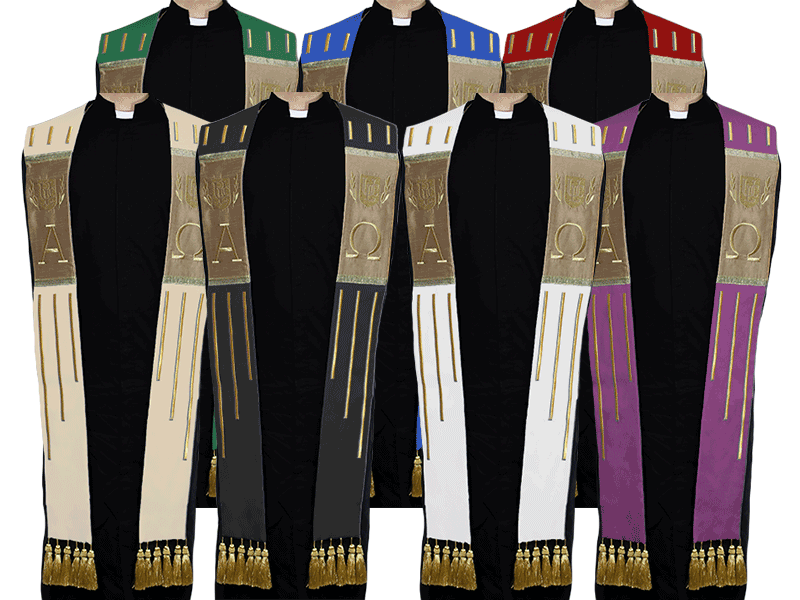
The Ceremonial Minister Stole is also available in multiple colors, allowing ministers to choose one that suits the ceremony, their personal style, or the event's color palette.
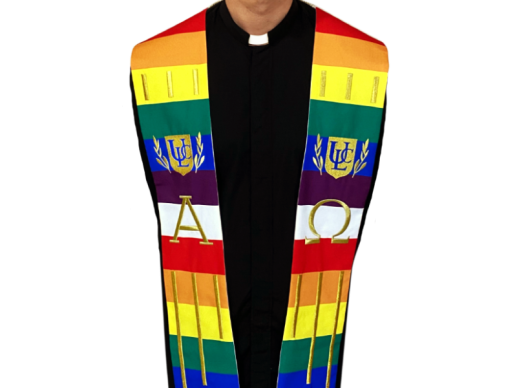
Alpha and Omega also appear on the ULC's Multicolor Minister Stole. This version pairs the symbols and ULC crest with a six-color rainbow design celebrating diversity and the differences that make each person unique. The rainbow can also serve as a symbol of LGBTQ+ pride and inclusion.
That makes the multicolor option particularly meaningful for ministers who want their ceremonial attire to visibly express inclusion, diversity, and acceptance.
Which Minister Stole Should You Wear?
There is no single correct choice.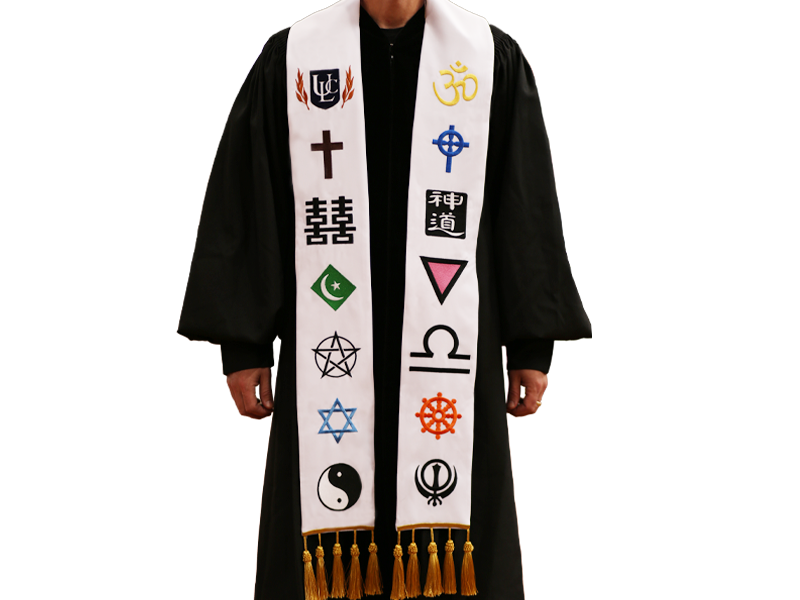
Religious Symbols Stole: A strong choice for interfaith, non-denominational, or spiritually diverse ceremonies. Its collection of symbols represents numerous faiths and perspectives.
Ceremonial Minister Stole: A simpler option for ministers who prefer a more traditional or understated appearance, with several colors available to suit different ceremonies.
Multicolor Minister Stole: A vibrant option for ministers who want to celebrate diversity and inclusion, including at LGBTQ+ weddings and other ceremonies where those themes hold special meaning.
The most important consideration is that your clothing fits the ceremony and helps guests understand your role without distracting from the people you are there to serve.
Find the Right Supplies for Your Ministry
Whether you officiate weddings, memorials, blessings, or other ceremonies, having the right materials can help you feel prepared and present your role clearly.
Explore the ULC Minister Store to find ceremonial attire, minister credentials, wedding supplies, books, accessories, and other resources for your ministry.
Not a ULC minister yet? You can also become ordained online for free before beginning your ministry.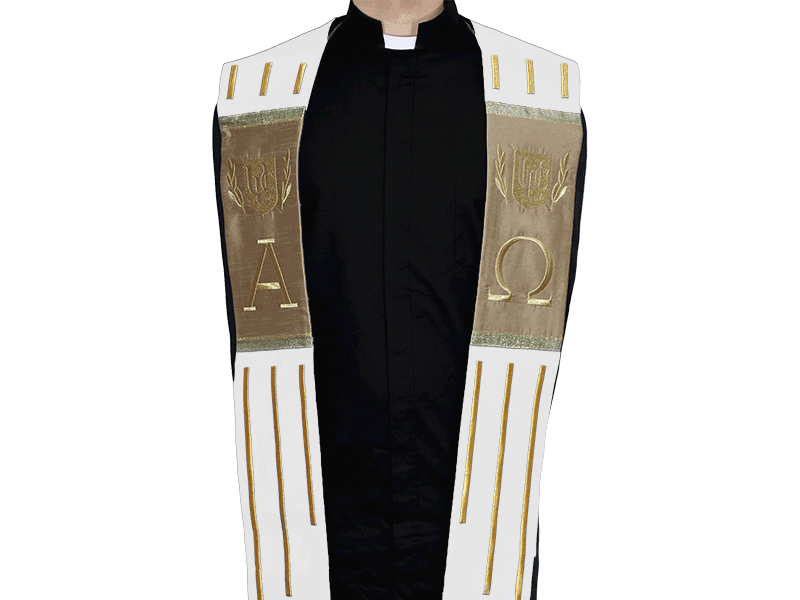
Frequently Asked Questions About Minister Stoles
Do ULC ministers have to wear a stole?
No. Wearing a minister stole is optional. It is ceremonial attire and is not required for ordination or for performing a wedding.
Ministers may choose to wear one because it helps distinguish the officiant, creates a more formal appearance, or reflects the tone and beliefs represented at the ceremony.
What is the best stole for an interfaith wedding?
A multi-faith stole can be a natural choice for an interfaith or non-denominational wedding because it does not center only one religious tradition.
The ULC Religious Symbols Stole includes symbols representing numerous faiths and perspectives, making it suitable for ceremonies where couples or guests come from different backgrounds.
What is the difference between the ULC Religious Symbols Stole and Ceremonial Minister Stole?
The Religious Symbols Stole emphasizes the ULC's multi-faith identity through a collection of religious and philosophical symbols.
The Ceremonial Minister Stole has a simpler design featuring the ULC crest and Alpha and Omega symbols and is available in several colors.
The best option depends on the type of ceremonies you perform and the appearance you prefer.
Can a minister wear a stole at a wedding?
Yes. A minister may wear a stole while officiating a wedding if it suits the formality and style of the ceremony.
It can be particularly useful for friend or family officiants because it visually distinguishes the person performing the ceremony from other guests.
Where can I buy a minister stole?
ULC ministers can purchase the Religious Symbols Stole, Ceremonial Minister Stole, and Multicolor Minister Stole through the ULC Minister Store, along with clergy apparel, credentials, wedding supplies, and other ministry resources.