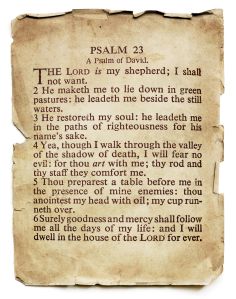
 Psalm 23 is one of the most recognizable passages in the Bible, but its influence reaches far beyond religious worship. From hip-hop and rock music to Hollywood films and classic literature, its imagery of shepherds, still waters, and the valley of the shadow of death has become part of popular culture.
Here's how this ancient biblical poem continues to inspire artists, storytellers, and public figures.
Key Takeaways
Psalm 23 is traditionally attributed to King David and is often called the Shepherd's Psalm.
Its themes of protection, comfort, faith, and mortality have made it a cultural touchstone beyond religious communities.
Musicians including Coolio, Pink Floyd, and Megadeth have referenced or reinterpreted its imagery.
Psalm 23 has appeared in films such as Titanic and Pale Rider, often during moments of fear, loss, or uncertainty.
Its influence extends to literature, public speeches, and familiar expressions such as "my cup runneth over."
What Is Psalm 23 About?
Psalm 23 is a biblical poem expressing trust in God's guidance and protection, even during life's most difficult moments. Traditionally attributed to King David, it portrays God as a shepherd who cares for and protects his flock.
The opening verses of the King James Version read:
The Lord is my shepherd; I shall not want.
He maketh me to lie down in green pastures: he leadeth me beside the still waters.
He restoreth my soul: he leadeth me in the paths of righteousness for his name's sake.
Perhaps its most recognizable passage is verse 4:
Yea, though I walk through the valley of the shadow of death, I will fear no evil: for thou art with me; thy rod and thy staff they comfort me.
These words have become especially meaningful in times of grief and uncertainty. Psalm 23 is frequently read at funerals and memorial services, where its message of reassurance offers comfort to mourners.
However, the psalm's universal themes have also helped it find an audience far beyond the church.
Psalm 23 in Popular Music
Psalm 23 has influenced centuries of music, from classical compositions and gospel performances to rock, hip-hop, and heavy metal.
Classical and Gospel Music
Composers including Franz Schubert and Leonard Bernstein created musical settings of Psalm 23, demonstrating its enduring appeal as religious poetry.
Duke Ellington's extended composition Black, Brown and Beige also incorporated the psalm. Gospel singer Mahalia Jackson famously performed the work's "Come Sunday" section, connecting Ellington's music with the spiritual traditions of African American communities.
Coolio's "Gangsta's Paradise"
One of the most recognizable modern references appears in Coolio's 1995 hit Gangsta's Paradise.
The song opens with an unmistakable adaptation of Psalm 23:4, replacing the biblical valley of death with a darker reflection on life in a dangerous environment.
Rather than offering the same reassurance found in the original psalm, Coolio uses its imagery to explore violence, mortality, and the consequences of his surroundings.
Pink Floyd's "Sheep"
Pink Floyd's 1977 song "Sheep," from the album Animals, offers a satirical reinterpretation of Psalm 23.
The song uses the language and imagery of the psalm to criticize conformity, authority, and social control. Instead of portraying the shepherd as a benevolent protector, the lyrics challenge the relationship between those who lead and those who follow.
Megadeth's "Shadow of Deth"
Heavy metal band Megadeth incorporated a spoken recitation of Psalm 23 into "Shadow of Deth," from the 2004 album The System Has Failed.
The contrast between the biblical words and the song's ominous atmosphere illustrates how religious imagery can take on different meanings depending on its artistic setting.
These examples show that musicians do not always reference Psalm 23 to express religious devotion. Some use it to question authority, confront death, or explore personal struggles.
Psalm 23 in Movies and Television
Filmmakers frequently turn to Psalm 23 when portraying danger, grief, or spiritual uncertainty. Its familiar words can immediately establish a scene's emotional or religious significance.
Titanic (1997)
In James Cameron's Titanic, a priest recites Psalm 23 as passengers confront the sinking ship.
The scene draws on the psalm's promise of divine presence in the face of death. For viewers familiar with the passage, its words add another layer of emotional significance to the tragedy.
Pale Rider (1985)
Clint Eastwood's Western Pale Rider uses Psalm 23 in a strikingly different way.
After a young girl's dog is killed, she recites portions of the psalm while expressing doubt about its comforting promises.
The scene contrasts the traditional message of divine protection with the character's fear and grief, demonstrating how familiar religious language can also become a vehicle for questioning faith.
Psalm 23 in Literature and Everyday Language
Psalm 23's influence extends beyond direct quotations. Its central image of a caring shepherd has become a familiar symbol of compassionate leadership, while several of its phrases have entered everyday speech.
The Good Shepherd in Literature
The shepherd imagery of Psalm 23 has parallels with the Christian concept of Jesus as the Good Shepherd, particularly in John 10:11.
This broader biblical theme appears in literature through characters who guide, forgive, or protect others.
In Victor Hugo's Les Misérables, for example, the Bishop of Digne demonstrates extraordinary compassion toward Jean Valjean. His decision to forgive Valjean's theft helps set the protagonist on a path toward redemption.
Although this is not a direct reference to Psalm 23, the bishop's actions reflect the compassionate spiritual guidance associated with shepherd imagery in Christian tradition.
"My Cup Runneth Over"
Another famous expression comes from Psalm 23:5:
Thou anointest my head with oil; my cup runneth over.
In its biblical context, an overflowing cup symbolizes abundance and divine blessing.
Today, people often use "my cup runneth over" to express gratitude, happiness, or an overwhelming amount of something.
The phrase has also appeared in contemporary music, including Eminem's "Rabbit Run," where its meaning shifts away from divine abundance toward intense personal emotion.
Psalm 23 in American History and Public Speeches
Psalm 23 has also played a role in American public life.
On September 11, 2001, President George W. Bush referenced the psalm during his address to the nation following the terrorist attacks.
He quoted its familiar words about walking through the valley of the shadow of death and fearing no evil.
By invoking Psalm 23, Bush drew on a passage many Americans recognized as a source of comfort during grief and national tragedy.
The speech demonstrates how biblical language can serve as a shared cultural reference, even in a religiously diverse society.
Why Does Psalm 23 Remain So Popular?
Psalm 23 continues to resonate because its central themes are not limited to one historical period or artistic genre.
The poem addresses experiences that remain familiar across cultures and generations: fear, loss, uncertainty, the desire for guidance, and the hope of finding peace.
Its vivid imagery also makes it particularly adaptable. A peaceful pasture can symbolize safety, while a dark valley can represent danger or suffering.
For religious readers, these images communicate trust in God. For artists and audiences approaching the psalm from a secular perspective, they can express broader questions about mortality, authority, and human vulnerability.
That flexibility helps explain why Psalm 23 remains recognizable in everything from church services to contemporary music.
The Bible as Literature and Cultural History
Whether approached as sacred scripture or ancient poetry, the Bible has profoundly influenced literature, music, and art.
The Book of Psalms is especially notable for its poetic language, emotional range, and exploration of humanity's relationship with God.
Although many psalms are traditionally attributed to David, the collection includes works associated with other figures, including Asaph, the sons of Korah, and Moses, as well as psalms with no named author.
Psalm 23 is a reminder that religious texts can have significance beyond their original worship settings. Their words and imagery continue to shape how people tell stories, express emotions, and understand the world.
For readers interested in exploring more biblical poetry, Psalm 23 in the King James Version is a natural starting point.
Explore Faith and Scripture With the Universal Life Church
The Universal Life Church welcomes people from diverse religious and spiritual backgrounds to explore faith, scripture, and the traditions that shape our culture.
Whether you're interested in biblical teachings or helping loved ones celebrate important milestones, you can become ordained online for free and join an inclusive community of ministers.
Frequently Asked Questions About Psalm 23 in Pop Culture
What is the most famous verse from Psalm 23?
Psalm 23:4 is among its most famous verses, particularly the phrase "Yea, though I walk through the valley of the shadow of death, I will fear no evil." It is frequently quoted in music, movies, speeches, and funeral services.
What songs reference Psalm 23?
Songs referencing or adapting Psalm 23 include Coolio's "Gangsta's Paradise," Pink Floyd's "Sheep," and Megadeth's "Shadow of Deth." These works interpret its language in different musical and cultural contexts.
What movies feature Psalm 23?
Psalm 23 appears in films including Titanic (1997) and Pale Rider (1985). Filmmakers often use its words to explore grief, fear, faith, and mortality.
Why is Psalm 23 often read at funerals?
Psalm 23 emphasizes comfort, protection, and God's presence during difficult times. Its imagery of walking through the valley of the shadow of death makes it especially meaningful during funeral and memorial services.
Who wrote Psalm 23?
Psalm 23 is traditionally attributed to King David, although its precise date and historical authorship cannot be established with certainty.