Key Takeaways
- A wedding pronouncement is made up of several key parts that work together to make the marriage clear, meaningful, and legally sound.
- Traditional pronouncements can be adjusted to fit different ceremony styles without losing their purpose.
- Knowing when and how the pronouncement of marriage fits into the ceremony helps you guide the couple smoothly from vows to celebration.
When you’re learning how to officiate a wedding, you quickly realize that you’re the conductor of the entire day. Your role is more than simply reading lines; you’re guiding the wedding ceremony to make sure every moment feels intentional and is legally sound.
One of the most meaningful moments you lead is the wedding pronouncement. To do it right, you need to know exactly what to say and when to say it. Below, we break down the different parts of a wedding pronouncement so you can handle this moment smoothly and give the couple a sweet memory.
What Are the Different Parts of a Wedding Pronouncement?
A wedding pronouncement, sometimes called a marriage pronouncement, is the formal statement you make as the officiant to announce that a couple is married. It’s the "green light" for the kiss and the cue for the crowd to cheer.
The purpose of the pronouncement is to clearly state that the marriage has taken place. While the exact wording can vary, the role of the pronouncement is to confirm the couple’s new marital status publicly.
Declaration of Authority
The declaration of authority is a part of the marriage pronouncement that establishes that you’re legally allowed to officiate the wedding. Your phrasing reassures the couple and the guests that you’re performing the ceremony with the proper credentials.
You don’t need to sound formal unless the couple wants that tone. You can adjust the wording to match the style of the ceremony. Example phrases you can use:
- “By the authority vested in me by the state, I’m honored to officiate this marriage.”
- “With the authority granted to me to solemnize weddings, I now act in this role today.”
- “Through the authority entrusted to me, I have the privilege of joining you in marriage.”
- “As someone legally authorized to perform weddings, I stand before you today.”
Even though the signed marriage license is what actually makes the marriage legal, your spoken declaration shows that the ceremony is being carried out correctly.
Confirmation of Vows/Intent to Marry
The confirmation of vows acknowledges that the couple has made intentional promises to one another and declared their intent to marry (often known as the "do you take/I do" exchange). By confirming this commitment, you make a clear connection between what they’ve said during their vows and the pronouncement. It also gives the moment a sense of completion before you announce the marriage.
Here are some examples of confirmation of vows:
- “You have each spoken your vows openly and with intention.”
- “You’ve shared your promises with one another and in front of those gathered here.”
- “Having heard your vows and your commitment to one another …”
- “You have made your promises with clarity and care.”
This language doesn’t restate the vows. Instead, it recognizes that the vows have already been shared and accepted.
Legal Language
Legal language reflects that you’re conducting the ceremony in accordance with state wedding laws. The exact wording is up to you, but the statement should clearly reflect that a lawful marriage is taking place.
That legal language might sound like:
- “In accordance with the laws of this state …”
- “Under the laws governing marriage here today…”
- “As required for a lawful marriage …”
- “With all legal requirements satisfied …”
This language acts as a bridge between the emotional elements of the ceremony and the formal declaration of marriage.
Pronouncement of Marital Status
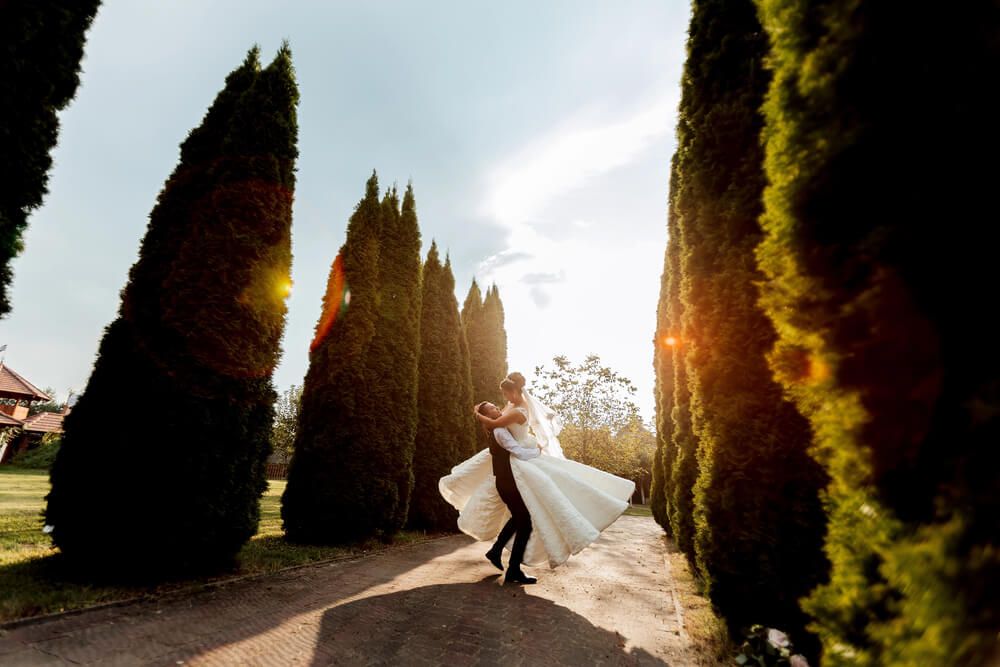
The part of a wedding pronouncement that is most exciting is the defining statement that publicly announces the couple is married. This is the line guests expect to hear, and it signals that the ceremony has officially reached its conclusion.
Example phrases you can use:
- “By the authority vested in me, I now pronounce you as husband and wife.”
- “It is my honor to pronounce you married.”
- “I now pronounce you spouses in marriage.”
- “From this moment forward, you are married.”
- “With great joy, I pronounce you married partners for life.”
The wording here can be traditional, modern, gender-neutral, or personalized, as long as it clearly states that the couple is now married.
The Couple’s Kiss
The kiss comes immediately after you pronounce the couple married. At this point in the ceremony, you have verbally declared the marriage, and the kiss serves as a visual and emotional transition from the formal ceremony to the celebration that follows.
You can invite the kiss with a clear cue, or you can pause and allow the couple to share the moment on their own. Example phrases you can use to cue the kiss include:
- “You may now kiss the bride.”
- “This is the moment you’ve been waiting for! You may kiss.”
- “Please celebrate your marriage with a kiss.”
- “You may seal your marriage with a kiss.”
Some couples prefer a traditional announcement, while others want something more personal or lighthearted. Always confirm their preference before the ceremony.
Presentation of the Couple
The presentation of the couple introduces the newly married partners to their guests. This moment shifts the energy from ceremony to celebration and lets everyone know it’s time to cheer, applaud, and celebrate.
Here are some examples of different ways you can present the couple:
- “Ladies and gentlemen, it’s my honor to present the newly married couple.”
- “Friends and family, please welcome the newlyweds.”
- “It is my pleasure to introduce the married couple.”
- “Everyone, let’s celebrate and welcome this newly married pair.”
- “Please join me in congratulating the newly married couple.”
You can keep this formal or lighthearted, depending on the tone the couple prefers.
What Are Examples of Different Marriage Pronouncement Styles?
Marriage pronouncements often fall into traditional or modern styles, based on the tone and language used during the ceremony. If you want to see how different styles sound in a full ceremony context, explore these sample wedding ceremony scripts.
Traditional Wedding Pronouncement Examples for Officiants
Traditional wedding pronouncements use formal language that has been part of weddings for generations. They often reference authority, permanence, or long-standing custom. These pronouncements work best for couples who value tradition, formality, or religious structure.
When to use traditional pronouncements
- Formal weddings
- Couples who want classic wording
- Traditional venues such as churches or cathedrals
Example of a traditional script:
“By the authority vested in me by the state of [State], and having witnessed your vows and the promises you have made today, it is my honor to pronounce you husband and wife. You may now seal your marriage with a kiss. Ladies and gentlemen, please join me in welcoming the newly married couple.”
Speak slowly and clearly so the weight of the words comes through. When you speak at a steady pace, the pronouncement feels more formal and gives the moment the importance couples expect from a traditional ceremony.
Example of a traditional religious script:
“By the grace of God and the authority entrusted to me, and in the presence of these witnesses, I now pronounce you husband and wife. What God has joined together, let no one separate. You may kiss. It is my pleasure to present the newly married couple.”
Modern Wedding Pronouncement Examples for Officiants
Modern pronouncements usually rely on simpler language and focus more on the couple’s commitment than on formality.
When to use modern pronouncements
- Non-religious ceremonies
- Casual or outdoor weddings
- Couples who prefer straightforward language
- Elopements or small ceremonies
Example of a modern script:
“You have shared your vows and committed your lives to one another here today. With great joy, I now pronounce you married. You may share your first kiss as a married couple.
Friends and family, please welcome the newlyweds.”
Blended Wedding Pronouncement Examples for Officiants
Some couples prefer a blended approach, combining familiar traditional elements with modern phrasing to keep the moment both meaningful and personal.
When to use blended pronouncements
Couples with mixed preferences
Semi-formal weddings
Ceremonies that balance tradition and personalization
Couples who want classic phrasing without religious language
Example of a blended script:
“By the authority entrusted to me and by the promises you have made today, I now pronounce you married. You may now seal your vows with a kiss.
It’s my honor to present the newly married couple.”
When Does the Marriage Pronouncement Happen in the Ceremony?
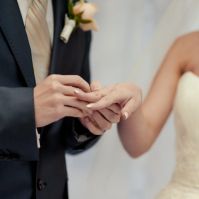
The pronouncement of marriage happens near the end of the ceremony, after you guide the couple through their vows and the ring exchange. Once the couple has shared their promises, you move into the pronouncement to clearly mark that the marriage has taken place.
This is often followed by a first kiss, a presentation of the couple, or a recessional. Placing the pronouncement here helps guests understand that the ceremony is complete and the celebration is about to begin.
Become Ordained To Lead All Parts of a Wedding With Confidence
When you understand each part of a wedding pronouncement, you can confidently give people a moment they’ll remember for the rest of their lives. If you feel called to perform weddings, getting ordained through the Universal Life Church is a simple way to step into that role. You can become a minister online for free, and be ready to serve when life’s biggest moments call.