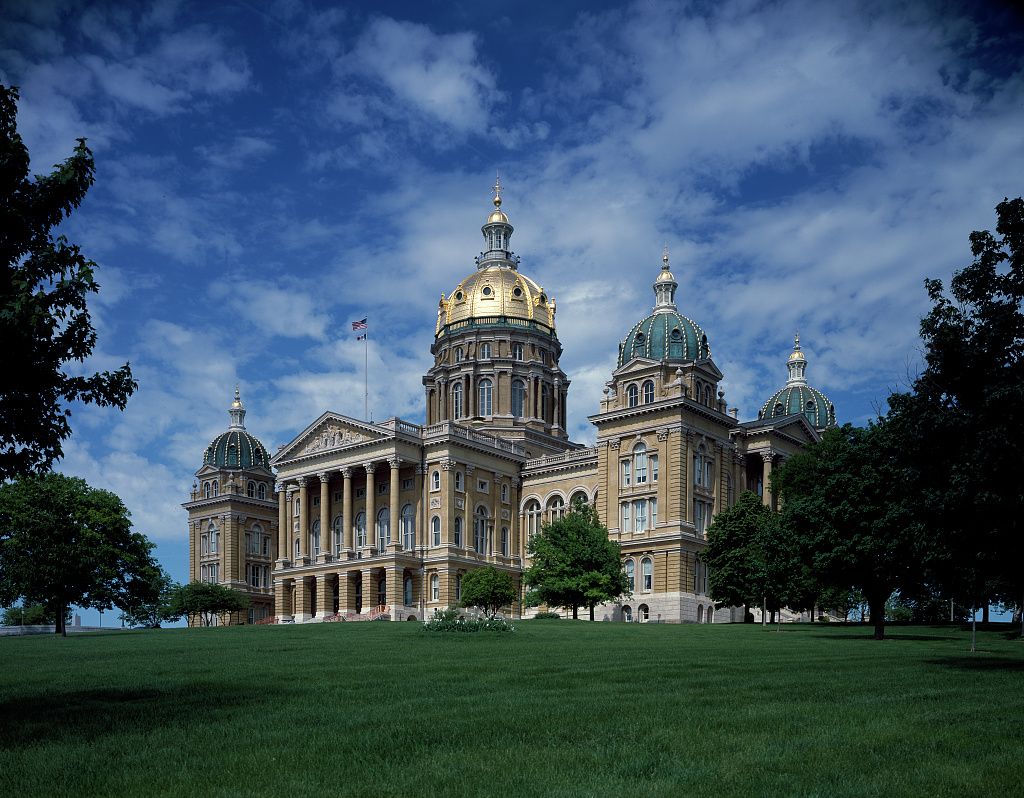
 A federal judge has ordered Iowa officials to allow The Satanic Temple to hold a holiday celebration at the state Capitol, ruling that the group's free speech rights were likely violated when its applications were repeatedly denied. But with the state appealing the decision, the legal battle over the planned December 12, 2026, event is far from over.
Key Takeaways
- On November 2, 2026, a federal judge ordered Iowa officials to approve The Satanic Temple's holiday event at the Capitol.
- State officials had rejected the group's applications in 2024, 2025, and 2026, citing concerns about costumes and children's safety.
- The judge found that The Satanic Temple was likely to succeed on its First Amendment free speech claim.
- Iowa officials have appealed the ruling, leaving the event's status uncertain.
What Is The Satanic Temple's Holiday Event?
The Satanic Temple's Iowa congregation has been trying to organize a winter holiday celebration at the Iowa State Capitol in Des Moines since 2024.
The proposed event includes caroling, children's coloring activities, ornament making, religious observances, and a costume contest featuring Krampus, a horned figure from European folklore traditionally associated with punishing misbehaving children during the Christmas season.
The group describes the planned gathering as family-friendly, but Iowa officials have repeatedly refused to grant permission.
The dispute follows an earlier controversy in December 2023, when The Satanic Temple displayed a statue of Baphomet in the Capitol rotunda alongside other holiday displays, including a Christian nativity scene. The Satanic display was subsequently vandalized.
Since then, attempts to organize another holiday event have faced opposition from state officials.
Why Did Iowa Officials Reject the Satanic Holiday Celebration?
According to court documents, the Iowa Department of Administrative Services initially denied the event applications over concerns about children's safety.
Officials argued that the Krampus costume contest could violate Capitol policies prohibiting displays harmful to minors. They also raised concerns about the sticks traditionally carried by costumed Krampus figures, suggesting the props could be used as weapons.
The Satanic Temple disputed those concerns, explaining that the sticks were decorative costume accessories. In 2024, the organization even offered to remove the costume contest from its plans.
The state nevertheless denied the application, along with subsequent requests for similar events.
During an October 2026 hearing, the court also examined statements made by former department director Adam Steen expressing opposition to Satanic religious activities and symbols.
The judge ultimately questioned whether the state's stated safety concerns were being applied neutrally or used to exclude a disfavored religious viewpoint.
Federal Judge Rules in Favor of The Satanic Temple
On November 2, 2026, Chief U.S. District Judge Stephanie M. Rose issued a preliminary injunction directing Iowa officials to approve The Satanic Temple's application.
The judge found that the organization was likely to succeed on its First Amendment free speech claim.
Under the ruling, officials could not exclude the event merely because its religious symbolism or message might offend or frighten some people.
The court also determined that concerns about costume props did not justify prohibiting the entire celebration. State officials could still enforce ordinary security screening and apply the same conditions imposed on other groups using the Capitol.
Importantly, the decision did not mean that Iowa was officially endorsing Satanism. Allowing a religious organization to use a public forum under neutral rules is different from government sponsorship of its beliefs.
Iowa Appeals the Satanic Temple Ruling
Although the initial ruling was a victory for The Satanic Temple, the legal dispute did not end there.
Iowa officials appealed the decision to the U.S. Court of Appeals for the Eighth Circuit. The district court also granted a stay pending appeal, temporarily preventing the preliminary injunction from taking effect while further proceedings continue.
The Satanic Temple's holiday event remains scheduled for December 12, 2026, but its ability to proceed at the Capitol is subject to the ongoing legal process.
The organization, represented by the American Civil Liberties Union of Iowa and other attorneys, is also seeking broader relief, including a final ruling on its constitutional claims and damages for past denials.
What Does the Ruling Mean for Religious Freedom?
At the center of the lawsuit is a familiar constitutional principle: When the government opens a public space for private religious expression, it generally cannot favor certain religious viewpoints while excluding others.
The Satanic Temple identifies as a nontheistic religious organization. Rather than worshipping a literal Satan, its members use Satan as a symbol of resistance to arbitrary authority and emphasize principles such as reason, compassion, and individual liberty.
Its beliefs may differ substantially from those of Christianity, Judaism, Islam, and other major religions, but that alone does not disqualify the group from constitutional protections.
For state officials, the distinction between government endorsement and equal access is particularly important. Permitting a Satanic holiday celebration under the same rules as a Christian or Jewish event does not require the government to support the group's beliefs.
Supporters of The Satanic Temple argue that the case demonstrates why religious neutrality matters, especially when an organization expresses unpopular ideas. Iowa officials, meanwhile, have defended their authority to regulate events in the Capitol and protect visitors.
The dispute is now headed through the appeals process, with the December holiday event approaching.
Whatever the ultimate outcome, the case raises a question extending far beyond Satanism: Does religious freedom protect only familiar beliefs, or does it also protect those that many Americans find objectionable?