 Key Takeaways
Rosh Hashanah is the Jewish New Year and begins on the first day of Tishrei in the Hebrew calendar.
The holiday begins the High Holy Days, a period of reflection and repentance that culminates in Yom Kippur.
Common Rosh Hashanah traditions include hearing the shofar, attending synagogue services, eating symbolic foods, and practicing tashlich.
Apples and honey symbolize hopes for a sweet new year, while round challah, pomegranates, and other foods carry additional meanings.
Rosh Hashanah falls in September or October on the Gregorian calendar, with the exact dates changing each year.
What Is Rosh Hashanah?
Rosh Hashanah, which means “head of the year” in Hebrew, is commonly known as the Jewish New Year. It begins on the first day of Tishrei, a month in the Hebrew calendar, and is one of Judaism's most important holidays.
Unlike New Year's celebrations centered primarily on parties and countdowns, Rosh Hashanah has a deeply reflective character. It is a time to consider the past year, examine one's actions, seek forgiveness, and think about how to live more intentionally in the year ahead.
Rosh Hashanah also marks the beginning of the High Holy Days, sometimes called the Days of Awe. This period of reflection continues through the Ten Days of Repentance and culminates with Yom Kippur, the Day of Atonement.
When Is Rosh Hashanah?
Rosh Hashanah begins on 1 Tishrei in the Hebrew calendar. Because the Hebrew calendar is lunisolar, its dates do not line up exactly with the Gregorian calendar used in the United States. As a result, Rosh Hashanah generally falls sometime in September or October.
Jewish holidays also begin at sunset rather than midnight.
Traditionally, Rosh Hashanah is observed for two days. Many Reform Jewish communities in North America observe one day, while others follow the traditional two-day observance.
For reference: Year Rosh Hashanah Begins Rosh Hashanah Ends 2026 Sunset, September 11 Nightfall, September 13 2027 Sunset, October 1 Nightfall, October 3 2028 Sunset, September 20 Nightfall, September 22
Why Is Rosh Hashanah the Jewish New Year?
Calling Rosh Hashanah “the Jewish New Year” can be slightly confusing because the Hebrew calendar has more than one traditional starting point.
The Mishnah describes four different “new years,” each used for a different religious or legal purpose. The first of Tishrei, Rosh Hashanah, is the new year used for counting years and is the date most commonly understood today as the Jewish New Year.
The Torah itself does not call the holiday “Rosh Hashanah.” Leviticus 23:23-25 describes a sacred observance on the first day of the seventh month marked by rest and the sounding of horns. Numbers 29:1 similarly describes the day as one of trumpet blasts.
Over time, Jewish tradition developed the holiday into the observance known today as Rosh Hashanah.
What Does Rosh Hashanah Celebrate?
Rosh Hashanah combines several themes, including renewal, reflection, repentance, judgment, and hope for the year ahead.
Rather than simply making New Year's resolutions, many Jews use the holiday to practice teshuvah, a Hebrew word often translated as “repentance” but more literally meaning “return.”
This can involve reflecting on mistakes, apologizing to people who have been wronged, repairing relationships, and resolving to make better choices in the future.
That work continues during the days leading to Yom Kippur.
Why Is the Shofar Blown on Rosh Hashanah?
One of the most recognizable Rosh Hashanah traditions is the sounding of the shofar, an instrument traditionally made from a ram's horn.
The shofar is sounded in a series of distinctive calls during Rosh Hashanah services. Its meaning has been interpreted in several ways. It can serve as a spiritual wake-up call, encouraging listeners to reflect on their behavior and return to their values.
The ram's horn is also traditionally associated with the biblical Binding of Isaac. In Genesis 22, Abraham ultimately sacrifices a ram instead of his son Isaac.
Customs surrounding the shofar can differ among Jewish communities. Under traditional Jewish law, for example, the shofar is not sounded when Rosh Hashanah falls on Shabbat.
What Foods Are Eaten on Rosh Hashanah?
Food plays an important symbolic role in many Rosh Hashanah celebrations. Customs vary among Jewish communities and families, but several foods are especially associated with wishes for a good year.
Apples and Honey
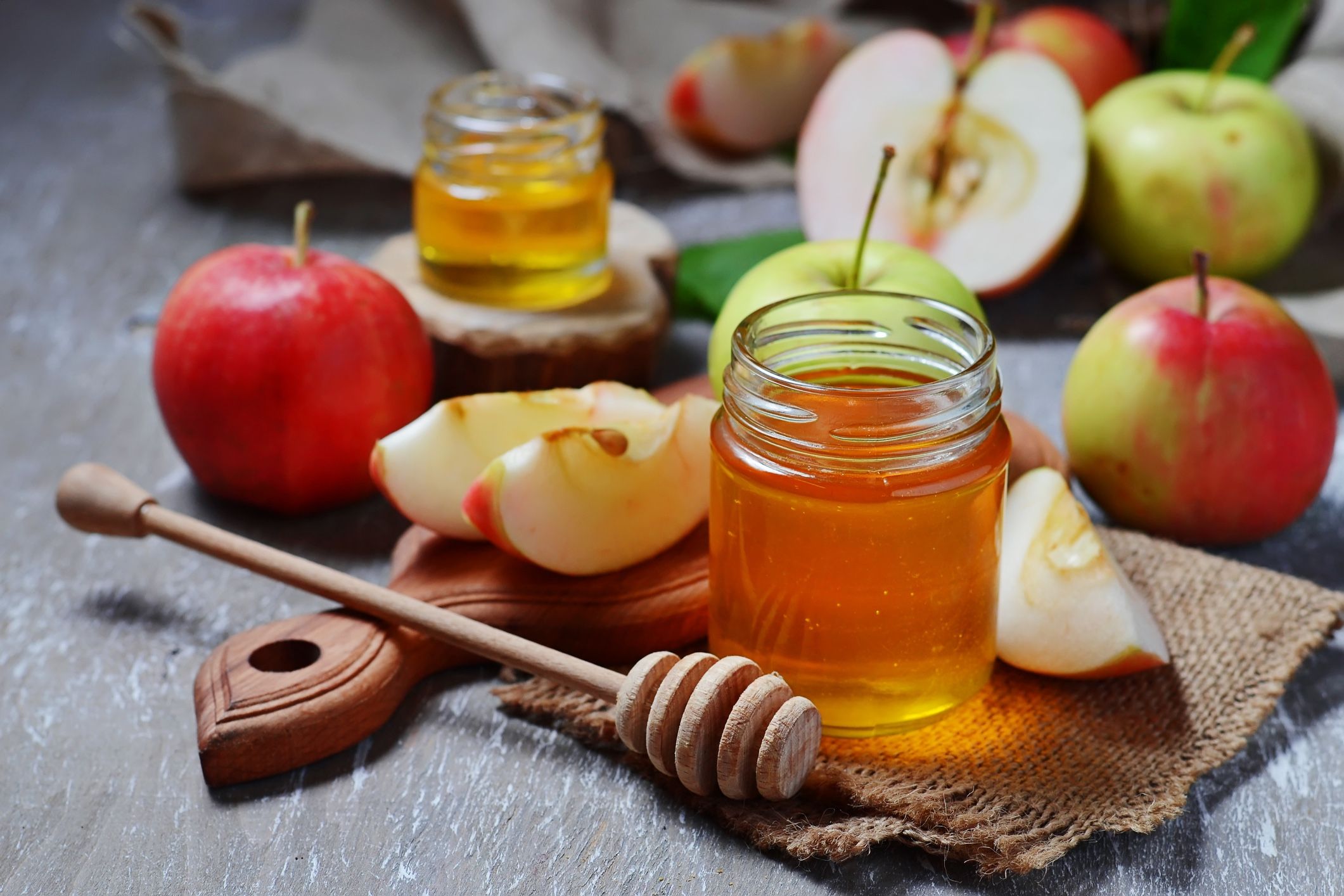
Perhaps the best-known Rosh Hashanah food tradition is dipping apples in honey, symbolizing the hope for a sweet year ahead.
A common greeting reflects the same idea: Shanah tovah u'metukah, meaning “a good and sweet year.”
Round Challah
Challah served during Rosh Hashanah is often baked in a round shape rather than the familiar braided loaf. The circle can represent continuity, the cycle of the year, or God's sovereignty.
Some families dip challah in honey during the holiday.
Pomegranates
Pomegranates are another traditional Rosh Hashanah food. Their many seeds have come to symbolize abundance, blessings, and hopes for performing many good deeds during the coming year.
Other Symbolic Foods
Jewish communities around the world have developed their own Rosh Hashanah food customs. These may include dates, carrots, leeks, gourds, fish, or the head of a fish.
These foods often involve wordplay or symbolism connected with wishes for prosperity, protection, leadership, or other blessings in the new year.
What Is Tashlich?
Another Rosh Hashanah tradition is tashlich, a Hebrew word meaning “casting off.”
During tashlich, participants traditionally gather near a natural body of flowing water and recite prayers while symbolically casting away the wrongdoings of the previous year.
The custom is connected with Micah 7:19, which describes sins being cast “into the depths of the sea.”
Some people have traditionally tossed pieces of bread into the water to represent their sins. Today, many congregations discourage throwing bread or other food into waterways because it can harm wildlife. Participants may instead use small stones, leaves, or simply perform the ritual symbolically without throwing anything.
How Do You Wish Someone a Happy Rosh Hashanah?
One of the most common Rosh Hashanah greetings is:
Shanah tovah, meaning “a good year.”
You may also hear:
Shanah tovah u'metukah, meaning “a good and sweet year.”
Simply saying “Happy Rosh Hashanah” is also perfectly appropriate.
A Time for Reflection and Renewal
Rosh Hashanah is festive, but its meaning extends beyond celebrating the arrival of another year. It begins a period devoted to reflection, accountability, forgiveness, and the possibility of beginning again.
From the sound of the shofar to the sweetness of apples and honey, its traditions reinforce a shared hope: that the coming year will bring opportunities to do better, repair relationships, and build a life filled with greater purpose.
Interested in learning more about religious traditions, ceremonies, and the role ministers can play in their communities? The Universal Life Church offers resources for people of all faiths and backgrounds, along with free online ordination for those who feel called to serve others.
Frequently Asked Questions About Rosh Hashanah
Is Rosh Hashanah the Jewish New Year?
Yes. Rosh Hashanah is commonly called the Jewish New Year and begins on the first day of Tishrei. Jewish tradition recognizes several historical “new years” for different purposes, but Rosh Hashanah is the date associated with the beginning of the new calendar year.
How long does Rosh Hashanah last?
Traditional observance lasts two days, beginning at sunset before 1 Tishrei. Many Reform Jewish communities in North America observe Rosh Hashanah for one day instead.
Why do Jews eat apples and honey on Rosh Hashanah?
Apples dipped in honey symbolize the hope for a sweet and fruitful new year. The custom has become one of the most widely recognized Rosh Hashanah traditions.
What is the difference between Rosh Hashanah and Yom Kippur?
Rosh Hashanah begins the High Holy Days and emphasizes reflection, renewal, and repentance. Yom Kippur occurs shortly afterward and is the Day of Atonement, traditionally marked by fasting, prayer, and an intensified focus on repentance.
Is Rosh Hashanah mentioned in the Bible?
The Torah describes an observance on the first day of the seventh month in Leviticus 23:23-25 and Numbers 29:1-6, but it does not use the later name “Rosh Hashanah.” Jewish tradition subsequently developed the holiday into the observance recognized today.