 Key Takeaways
Parents and former students are suing Palo Alto Unified School District over a 2025 field trip to a Santa Clara mosque, alleging that the school crossed the line from teaching about Islam to promoting it.
A Palo Alto High School student journalist says accounts from classmates who attended the trip provide important context missing from the lawsuit.
Students interviewed by The Paly Voice said entering prayer areas, covering their hair, and taking Qurans were optional.
Federal guidance allows public schools to teach about religion, but schools must remain neutral and cannot promote, favor, or coerce participation in religious practices.
The federal lawsuit remains pending, with no court ruling yet on whether the field trip violated the Constitution.
What Do Students Say Happened on the Palo Alto Mosque Field Trip?
A controversial field trip to a California mosque is now at the center of a federal lawsuit, but some Palo Alto High School students say the allegations do not tell the whole story.
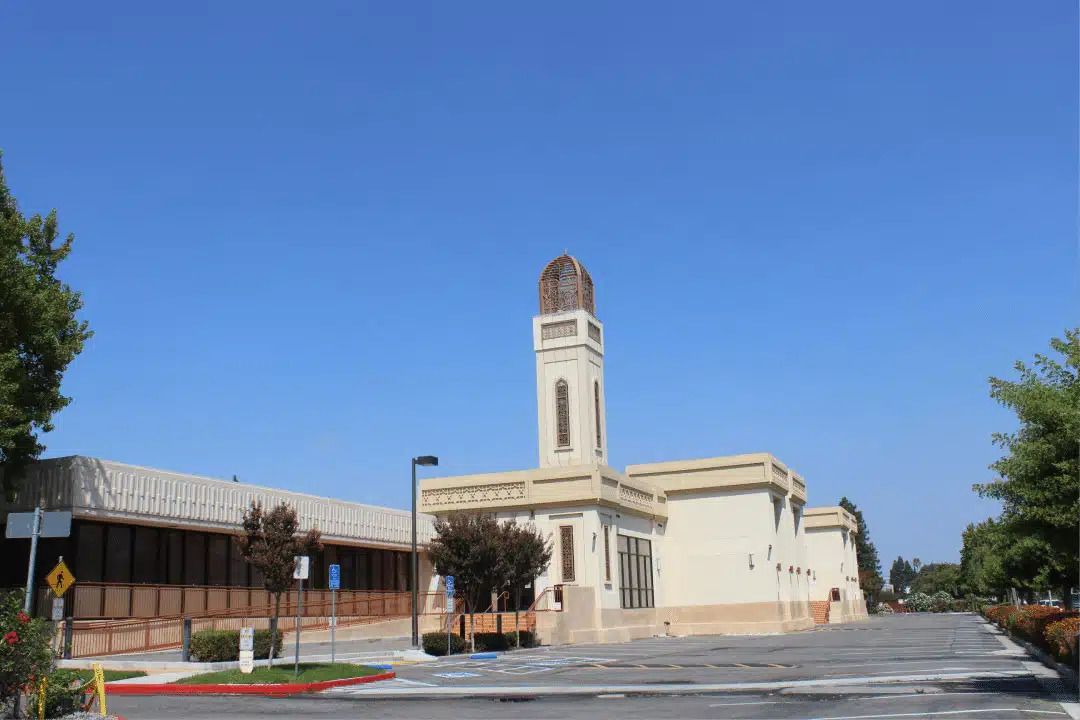
In August, parents, former students, and a group called Community Members for Religious Neutrality in Public Schools sued Palo Alto Unified School District and Palo Alto High School Principal Brent Kline over a fall 2025 visit to the Muslim Community Association in Santa Clara.
The lawsuit alleges that students were encouraged to wear Islamic religious attire, received Qurans, observed Muslim prayer, and were exposed to messaging portraying Islam as particularly connected to social justice. Plaintiffs argue that the school crossed the constitutional line between teaching about religion and promoting a particular faith.
But an August 19 opinion piece in The Paly Voice, Palo Alto High School's student publication, offers a different account based on interviews with students who attended the trip.
Did the School's Religion Unit Focus Only on Islam?
According to Paly Voice Editor-in-Chief Juni Thurston, the mosque visit was part of a much broader religion unit in the school's Social Justice Pathway.
Students studied Judaism, Christianity, Islam, Hinduism, Buddhism, Baha'i, and Taoism during the course. Thurston wrote that students completed essays and presentations about the different traditions and explored connections between religion and social issues.
That context challenges the idea that Islam was the only religion taught in the classroom.
However, Islam was the only religion in the unit that received a field trip to a house of worship. The plaintiffs' attorney argues that this gave Islam a level of attention other faiths did not receive.
That fact does not automatically make the curriculum unconstitutional. Federal guidance says public schools may teach comparative religion and study religious beliefs, texts, and practices as part of an academic curriculum. Schools are not required to devote identical amounts of time or identical activities to every religion.
They must, however, remain neutral rather than promote or favor one faith over another.
Were Students Required to Wear Hijabs or Participate in Prayer?
This is another point where the lawsuit and student accounts differ.
The lawsuit alleges that students were encouraged to wear Islamic religious clothing and were exposed to religious activities during the visit.
Students interviewed by The Paly Voice described the experience differently.
One student said entering the mosque's prayer areas was optional. Female students who chose to enter a sensitive prayer area were encouraged to cover their hair, but one student said she simply tucked her hair into her hoodie rather than wearing a hijab. Students could also choose not to enter the area.
The Muslim Community Association has similarly denied that students were coerced. Its communications director told Religion News Service that taking Qurans and wearing hijabs were optional. Copies of the Quran were reportedly made available rather than forced upon every student.
Whether those circumstances amount to religious education, religious participation, or unconstitutional pressure is ultimately part of what the lawsuit asks the court to consider.
Did Parents Give Permission for the Mosque Field Trip?
The original controversy has also raised questions about parental consent.
According to Thurston, students who attended the field trip were required to have permission slips signed by their parents.
The lawsuit's consent argument is more specific. Plaintiffs contend that parents were not adequately informed about the religious activities students would encounter and allege that students were photographed in religious attire without proper parental consent. Some of those photographs were later posted publicly by the mosque, according to the lawsuit.
The plaintiffs are asking the court to require stronger parental-consent protections for similar activities in the future.
Why Is Zahra Billoo Part of the Controversy?
The field trip also included a presentation from Zahra Billoo, executive director of the San Francisco Bay Area chapter of the Council on American-Islamic Relations.
The lawsuit criticizes the school for exposing students to Billoo without presenting a countervailing viewpoint, pointing to controversial past statements she has made about Jewish and pro-Israel organizations.
Thurston's student op-ed does not dismiss this concern. She wrote that Billoo should not have been invited to participate in the trip.
However, a student who attended said Billoo primarily discussed her work representing Muslims facing discrimination and answered questions about Islam. Billoo has argued that the lawsuit risks treating ordinary educational exposure to Muslims and Islam as inherently suspicious.
Can Public Schools Take Students to Religious Sites?
Public schools are allowed to teach students about religion.
Current U.S. Department of Education guidance specifically recognizes comparative religion, religious history, religious texts as literature, and the influence of religion on society as permissible academic subjects.
But there is an important distinction: schools may teach about religion, but they may not provide devotional religious instruction, promote one faith, or pressure students to participate in religious activities.
That means the central legal question is not simply whether Palo Alto students visited a mosque or whether every religion received an identical field trip.
Instead, the court may have to examine whether the visit had a legitimate educational purpose and remained religiously neutral, or whether the combination of religious clothing, Qurans, prayer observation, speakers, and other activities crossed into government-sponsored religious promotion.
Why Do the Student Accounts Matter?
The student accounts do not resolve the lawsuit.
Thurston herself acknowledges an important limitation: she missed the field trip because she was ill. Her article relies on interviews with classmates who attended, whose names were replaced with pseudonyms because of the attention surrounding the case.
At the same time, those accounts provide firsthand perspectives that complicate several of the lawsuit's allegations.
Some students say they experienced the trip as observation rather than participation and did not feel pressured to adopt or practice Islamic beliefs. The plaintiffs respond that whether individual students enjoyed or felt comfortable with the trip does not by itself determine whether the school's conduct was constitutional.
Both points can be true. Student experiences provide important factual context, while the legal question depends on whether school officials maintained the religious neutrality required of a public institution.
What Happens Next in the Palo Alto Mosque Lawsuit?
As of September 9, 2026, no court has ruled that Palo Alto Unified School District violated students' constitutional rights.
The lawsuit, Community Members for Religious Neutrality in Public Schools – San Francisco Bay Area v. Kline, was filed August 7 in the U.S. District Court for the Northern District of California. An amended complaint followed on August 10.
The case remains open, with an initial case management conference currently scheduled for November 10, 2026.
Until the court considers the evidence, claims that the school engaged in religious indoctrination, as well as defenses that the trip was purely educational, remain disputed.
The broader question is one public schools across the country regularly face: How can students learn about religion firsthand without a school appearing to endorse the faith they are studying?