Key Takeaways
- Most couples in the United States spend between $200 and $500 on a wedding officiant.
- Wedding officiant prices can range from about $50 for a simple civil ceremony to more than $1,000 for a highly customized or destination wedding.
- Civil officiants are generally the most affordable, while professional celebrants often charge more for personalized scripts, rehearsals, and planning.
- Travel, ceremony customization, rehearsal attendance, experience, and additional services can increase the final cost.
- Asking a friend or family member to get ordained online can make the ceremony more personal while significantly reducing officiant costs.
Most couples pay between $200 and $500 for a wedding officiant, but prices vary considerably.
A basic courthouse ceremony may cost as little as $50, while an experienced professional celebrant may charge $600 or more. Destination weddings, luxury ceremonies, and highly personalized services can push the total above $1,000.
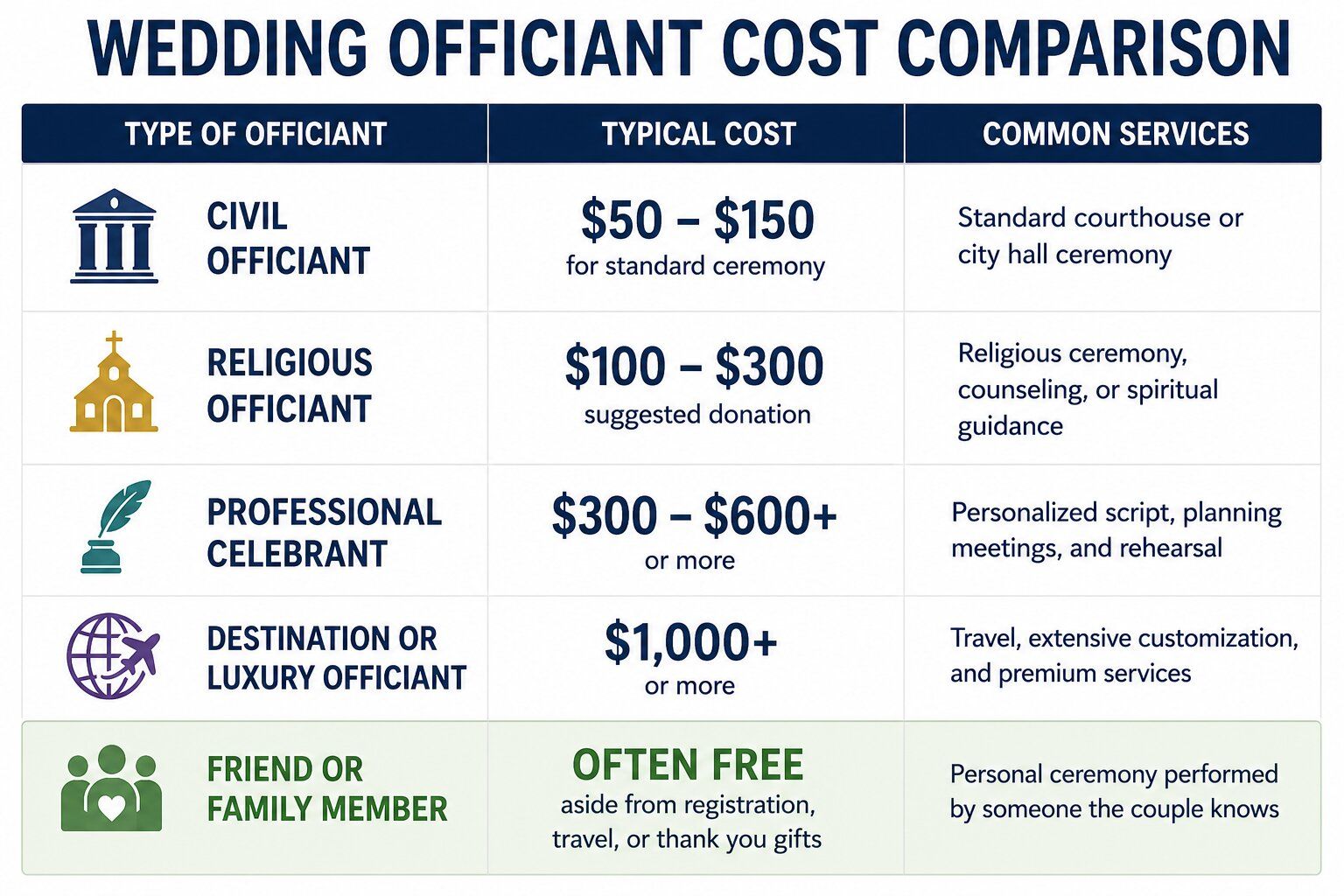
Typical wedding officiant costs include:
- Civil officiant: $50 to $150
- Religious officiant: $100 to $300 suggested donation
- Professional wedding celebrant: $300 to $600 or more
- Destination or luxury officiant: $1,000 or more
- Friend or family member: Often free, aside from registration, travel, or thank you gifts
You have chosen a date, found a venue, and started planning the details of your wedding. But who will actually perform the ceremony?
Choosing a wedding officiant is one of the most important decisions in the planning process. The officiant guides the ceremony, leads the couple through their vows, and often completes the legal paperwork afterward.
As you compare your options, you may wonder how much wedding officiants charge and what services are included in their fees. The answer depends on the type of officiant you choose, where the wedding takes place, and how customized you want the ceremony to be.
Types of Wedding Officiants and What They Cost
What Affects the Cost of a Wedding Officiant?
One officiant may charge $150 while another charges $1,000 or more. The difference often reflects the amount of time, travel, preparation, and customization required.
Location
Wedding officiant fees vary by city and region.
Officiants in large metropolitan areas and popular wedding destinations often charge more than those in smaller communities. Local demand, the cost of living, and the number of available officiants can all influence pricing.
Travel
An officiant may charge travel fees if the venue is outside their regular service area.
These costs may include:
- Mileage
- Parking
- Tolls
- Airfare
- Hotel accommodations
- Meals
- Ground transportation
Couples planning a destination wedding should ask for a complete travel estimate before signing an agreement.
Type of Officiant
A civil official performing a short standard ceremony will usually cost less than a professional celebrant who creates a completely customized experience.
Professional officiants often charge more because they spend additional time meeting with the couple, writing the ceremony, reviewing vows, and coordinating the event.
Ceremony Customization
A simple ceremony using standard wording requires less preparation than a personalized ceremony built around the couple’s story.
Customization may include:
- Original ceremony scripts
- Personal stories
- Custom vows
- Cultural traditions
- Religious readings
- Unity rituals
- Family participation
The more personalized the ceremony becomes, the more preparation time the officiant may need.
Rehearsal Attendance
Some officiants include rehearsal attendance in their package, while others charge an additional fee.
A rehearsal allows the officiant to coordinate the processional, confirm where everyone will stand, review ceremony cues, and answer last-minute questions.
Couples should ask whether the rehearsal is included before booking.
Ceremony Length
Longer ceremonies may cost more, especially when they involve several readings, rituals, musical performances, or participants.
The length of the ceremony may also affect preparation time, script development, and rehearsal needs.
Experience and Demand
Experienced wedding officiants may charge higher rates because they are skilled at managing unexpected situations, calming nervous couples, and delivering ceremonies confidently.
Popular officiants may also charge premium prices for high-demand dates, especially Saturdays during peak wedding season.
Additional Services
Some officiants only perform the ceremony. Others provide complete planning and support packages.
Additional services may include:
- Premarital counseling
- Vow writing assistance
- Ceremony script development
- Rehearsal coordination
- Marriage license filing
- Keepsake ceremony copies
- Audio equipment
- Wedding planning support
Ask for an itemized list, so you understand exactly what is included in the quoted price.
Does the Wedding Officiant File the Marriage License?
Many officiants complete and return the marriage license after the ceremony, but couples should never assume this service is included.
The exact process varies by state and county. In some locations, the officiant must return the completed license. In others, the couple may be responsible for submitting it.
Before the wedding, ask the officiant:
- Who will complete the license
- Who will return it
- When it must be submitted
- Whether filing is included in the fee
- Whether the officiant keeps a copy
The marriage license is the legal record of the marriage, so every required field and signature must be completed correctly.
Should You Tip a Wedding Officiant?
Tipping a wedding officiant is not always required, but it may be appropriate depending on the type of officiant and the services provided.
Religious Officiants
Religious officiants often receive a donation rather than a traditional tip. A suggested donation may range from $100 to $300, depending on the congregation and ceremony.
Civil Officiants
Government employees may be prohibited from accepting tips. Couples should check local rules before offering additional payment.
Professional Officiants
Professional officiants do not always expect a tip because their service fee is already included in the contract. However, couples may choose to give a gratuity of 10 to 20 percent for exceptional service.
Friends and Family Members
A friend or relative may be uncomfortable accepting cash. Covering their travel expenses and giving them a thoughtful gift is often a better way to show appreciation.
A handwritten note, framed photo, personalized keepsake, or special dinner can serve as a meaningful thank you.
How Much Should You Pay a Friend to Officiate Your Wedding?
There is no required amount to pay a friend or family member who officiates a wedding.
Some loved ones may consider officiating to be their wedding gift. Others may spend considerable time preparing the ceremony, attending rehearsals, traveling, and handling paperwork.
At minimum, couples should consider covering:
- Travel costs
- Lodging
- Meals
- Registration expenses
- Minister documents
- Ceremony supplies
A thank you gift worth between $50 and $200 may be appropriate, depending on the person’s involvement and the couple’s budget.
The most important consideration is showing appreciation for the time and responsibility the officiant has accepted.
How to Save Money on a Wedding Officiant
Couples can reduce officiant costs without sacrificing the meaning of the ceremony.
Ask a Loved One to Officiate
Having a friend or family member get ordained online can eliminate the cost of hiring a professional officiant.
This option also gives the couple more control over the ceremony’s tone, wording, and personal details.
Choose a Courthouse Ceremony
Courthouse and city hall ceremonies are often the least expensive option.
They are ideal for couples who want a simple legal ceremony and do not need a customized script or rehearsal.
Hire a Local Officiant
Choosing someone who lives close to the venue can reduce mileage, travel, and lodging charges.
Keep the Ceremony Simple
A shorter ceremony with standard vows and fewer special rituals usually requires less preparation.
Skip the Rehearsal
A rehearsal may not be necessary for a small or straightforward ceremony. Ask the officiant whether a brief planning call or venue walkthrough could replace a formal rehearsal.
Compare Complete Packages
The least expensive starting price is not always the best deal.
One officiant may charge a low ceremony fee but add separate costs for travel, rehearsal attendance, and marriage license filing. Another may include everything in one package.
Compare the total cost and included services before making a decision.
Is Hiring a Professional Wedding Officiant Worth It?
A professional officiant can be worth the investment for couples who want guidance, customization, and peace of mind.
An experienced officiant can help:
- Organize the ceremony
- Create a clear and engaging script
- Guide the couple through legal requirements
- Coordinate readings and rituals
- Manage unexpected interruptions
- Deliver the ceremony confidently
- Complete marriage paperwork properly
Couples who prefer a highly personal ceremony may instead choose a friend or family member. That person should be comfortable speaking in public, willing to prepare, and able to complete the legal responsibilities of officiating.
The best option depends on the couple’s budget, preferences, and desired ceremony experience.
Make Your Wedding More Personal and Affordable
Hiring a professional officiant can provide valuable experience and support, but it is not the only option.
Many couples choose a trusted friend or family member to officiate their wedding. This approach can save hundreds of dollars while making the ceremony feel more meaningful and personal.
The Universal Life Church offers free online ordination, allowing people from all backgrounds and beliefs to become ministers. Once ordained, a person may be able to legally perform weddings after meeting the requirements in the state or countywhere the ceremony will occur.
Before the wedding, the officiant should review the applicable state marriage laws, obtain any required credentials, and complete local registration if necessary.
Getting ordained is only the first step. New ministers can also use wedding ceremony scripts, minister training resources, and state-specific guides to prepare for the ceremony and understand their legal responsibilities.
 Frequently Asked Questions About Wedding Officiant Costs
What is the average cost of a wedding officiant?
Most couples spend between $200 and $500 on a wedding officiant. A basic civil ceremony may cost about $50 to $150, while professional celebrants commonly charge $300 to $600 or more.
Why are some wedding officiants so expensive?
Professional officiants may spend several hours meeting with the couple, writing a custom ceremony, reviewing vows, attending the rehearsal, traveling to the venue, and completing marriage paperwork. Their fee reflects both the ceremony and the preparation behind it.
Is it cheaper to have a friend officiate a wedding?
Yes. A friend or family member can get ordained online for free through the Universal Life Church. Couples may still need to pay for credentials, local registration, travel expenses, or a thank-you gift.
Do you have to pay a minister to perform a wedding?
Not always. Some religious ministers request a donation instead of charging a formal fee, particularly when the couple belongs to their congregation. Other ministers and professional officiants charge a set rate.
Does an officiant’s fee include the rehearsal?
Sometimes. Some officiants include one rehearsal in their package, while others charge an additional fee. Couples should confirm what is included before signing a contract.
Who usually pays the wedding officiant?
The couple typically pays the wedding officiant. However, a parent or another family member may cover the expense as part of their contribution to the wedding.
Should you tip a wedding officiant?
Tipping is generally optional. Religious officiants may receive a donation, while professional officiants may receive a gratuity for exceptional service. Civil officials may not be permitted to accept tips.
How much should you give a friend who officiates your wedding?
There is no required amount. Couples should cover reasonable expenses and consider giving a thoughtful gift or honorarium based on the time and effort involved.
Can anyone become a wedding officiant?
Many adults can become ordained online and perform weddings, but marriage laws vary by location. Some states or counties require the officiant to register or present minister credentials before the ceremony.
Can you officiate your own wedding?
Self-solemnization is allowed only in certain jurisdictions. Most couples need an authorized third party to perform and solemnize the marriage.
Does the wedding officiant pay for the marriage license?
No. The couple normally pays the marriage license fee. The officiant may complete and submit the license after the ceremony, depending on local procedures.
How far in advance should you book a wedding officiant?
Couples should generally book an officiant six to twelve months before the wedding. Popular officiants and peak season dates may require earlier reservations, while civil ceremonies and smaller weddings may be arranged with less notice.