 Native Americans have a rich heritage of spirituality that is closely connected to nature. Wyoming is home to many sacred and spiritual locations important to Native Americans. These holy places are mostly open to the public, but please respect local customs and traditions when visiting.
Jenny Lake
A Shoshone woman, Jenny, and her six children died here in 1876. The lake is named for her. It is considered one of the most pristine lakes in North America. During the ice age, the glaciers carved out depressions along the valley floor. Water filled those depressions and formed the lake, which is over 250 feet deep. The park is open to visitors. It's a lovely place for hiking and camping, but it is also considered a sacred ceremonial site where Sun Dances were once held.
Crowheart Butte
A butte is similar to a mesa, but smaller. It is an isolated hill with very steep sides and a flat top. Crowheart Butte can be seen from miles away. In 1866, the Shoshone and Bannock tribes fought the Crows over hunting rights at the site. Shoshone Chief Washakie eventually won a battle against Crow Chief Big Robber. Washakie removed the heart of the Crow Chief and displayed it on his lance. Today, many young Native American men use the place as the site of their vision quest. Non-Indians are forbidden from climbing the butte, but can visit the site. There are many guardian spirits that reside here.
White Mountain Petroglyphs
Places where Native American rock art can be found are considered sacred. Petroglyphs are images that are carved into the rock. Pictographs are drawn, possibly painted, onto the rock. The carved figures at White Mountain date 200 to 1,000 years ago. There are many figures of bison, elk and horses, along with a warrior figure wielding a sword. Most historians believe that this demonstrates the contact with European cultures. The Shoshone, Arapaho and Ute tribes consider the site sacred. Petroglyphs are very fragile. Take only photographs and leave only footprints.
Inyan Kara Mountain
This mountain is only accessible through private property. The landowner must grant permission for anyone to visit. If you do get to the mountain, there are no trails. The Lakota recognize the mountain as a sacred site for mothers giving birth. Legend says that General Custer carved his name on the mountain during his 1874 expedition through the Black Hills. The mountain reaches 6,368 feet, which provides an excellent view of the area. It can be seen from County Road 585 in Crook County, WY.
Bighorn Medicine Wheel
A medicine wheel is typically a stone monument that illustrates a spiritual concept. The one at Bighorn Range is only reachable during the warm summer months. It's 9,642 feet high in the mountains. The wheel was constructed 300 to 800 years ago. It's 80-feet in diameter with 28 spokes. In the center of the wheel is a stone monument, or cairn. Six other cairns are arranged around the circle. These cairns point to where the sun rises or sets during the summer solstice. This site is sacred to many different tribes, for peace talks, vision quests and thanks offerings.
Devil's Tower
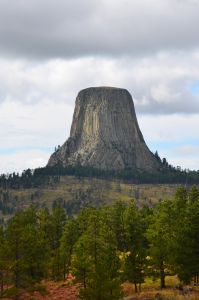
Devil's Tower is closely tied to the plot of the movie, "Close Encounters of the Third Kind," but its heritage extends thousands of years longer. The monolith stands 867 feet from summit to base. Native Americans refer to it as Bear's House, Tree Rock, Brown Buffalo Horn and Aloft on a Rock, depending on the tribe. This site is also sacred, but it is open to visitors. The Native American community requests that visitors not climb the rock during the month of June because the tribes conduct ceremonies around the tower during this month. Sadly, not everyone honors the requests.