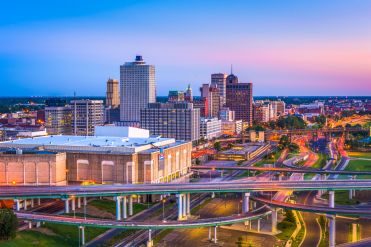
 Memphis is a major city in Tennessee, although it is fairly young. Future president Andrew Jackson, judge John Overton, and other wealthy Americans founded the planned city in 1819. Lorraine Motel, the site of Rev. Martin Luther King's assassination, is one of the city's most noteworthy attractions, as is Graceland, Elvis Presley's mansion. But there is a lot more to Memphis than the notable people who once called it home. Take a tour through some of the historic churches in this town.
Clayborn Temple
This building was constructed in 1891, of Romanesque Revival architecture. The gabled roofs are just one of the spectacular features of the church. When the church was dedicated, it was the largest church in the U.S. south of the Ohio River. It had no idea that in 70 years, it would become a staging ground for the civil rights movement of the 1960s. During the Memphis Sanitation Strike, Dr. Martin Luther King came to the city to support the sanitation workers. A march was planned with King at the forefront. A riot erupted during the march. Police reacted brutally. Protestors returned to the church. Police surrounded the building and then entered the church and shot off tear gas. Over 60 people were injured and one 16-year-old boy was killed by the police. The funeral was held at Clayborn Temple. Sadly, the church was vacant for many years, but it's under restoration today.
Calvary Episcopal Church
Calvary is a landmark church, because its sanctuary is the oldest building in Memphis in continuous use. The 130+-year-old stained-glass windows are absolutely gorgeous. Not only are they a historic treasure, the windows also enhance the worship experience. In the 1960s, following King's assassination, the church was instrumental in the healing of the city. Sadly, the congregation dwindled in the next few decades. In 2007, the church celebrated 175 years of ministry.
Mason Temple, Church of God in Christ
Designed in the Art Moderne style, this church is part of six buildings that form the denomination's world headquarters. Although the church was constructed in 1941, it is a very historic building. It was here that Dr. King gave his final speech, "I've Been to the Mountaintop," on the eve before his assassination. The church should not be confused with a masonic temple. It is named for a founder of the Church of God in Christ, Bishop Charles Harrison Mason. He is entombed in a crypt inside the temple.
First Beale Street Baptist
This congregation originated in 1849, in the home of a white Baptist minister. Blacks were prohibited by city ordinance from gathering and worshipping unless a white man was present. It was the first brick church in the south built for former slaves. Although the city ordinance changed in 1862, when the city fell to Union forces, the church continued under the leadership of a white minister for another two years. It would take the congregation almost 22 years to raise the money to build the magnificent structure. Ida B. Wells used the basement of the church to publish a newspaper for African-Americans, which was a first in the nation in the 1890s.
Grace-St. Luke's Episcopal Church
This church dates back to the mid-19th century. It's actually the merger of many churches. Grace Church merged with St. Lazarus Church after the Civil War. St. Lazarus church was founded by Confederate officers and was the place where Jefferson Davis' daughter was married. Yellow fever decimated the congregation in 1878, and it merged with Grace Church. In the 1930s, Grace Church was growing, but didn't have a building. St. Luke's had a new building, but a declining membership. The two congregations merged. This parish emphasized inclusivity when it ordained the first female in the state of Tennessee in 1981. The stained-glass windows date back to 1900. One is a Tiffany window that was installed under the personal supervision of Louis Comfort Tiffany.